
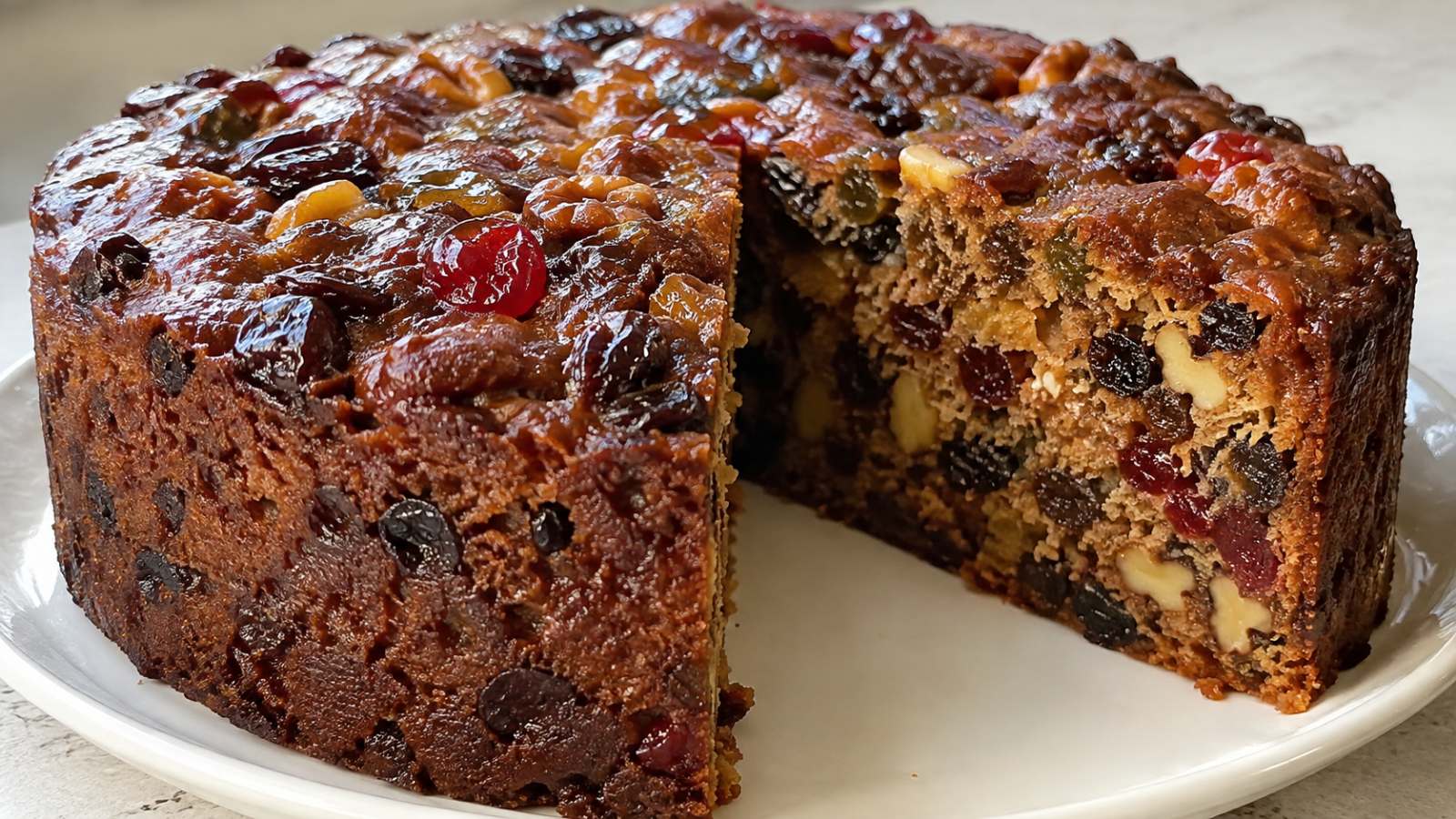
The World’s Best Fruit Cake is rich, moist, and packed with dried fruits, toasted nuts, warm spices, and a buttery crumb. This traditional recipe produces a beautifully balanced cake with deep caramel notes, natural fruit sweetness, and a tender texture that improves as it matures.
Ingredients
This recipe makes one deep 9-inch round fruit cake, approximately 14–16 servings. Use good-quality dried fruit, fresh spices, and real butter for the richest flavor.
For the Fruit Mixture
-
1 cup (150 g) raisins
-
1 cup (150 g) golden raisins
-
1 cup (150 g) dried currants
-
¾ cup (120 g) chopped dried apricots
-
½ cup (80 g) dried cranberries
-
½ cup (100 g) chopped candied cherries
-
½ cup (100 g) chopped candied orange peel
-
¾ cup (180 ml) orange juice, dark rum, or brandy
-
2 tablespoons orange zest
For the Cake Batter
-
1¾ cups (220 g) all-purpose flour
-
1 cup (225 g) unsalted butter, softened
-
¾ cup (150 g) dark brown sugar
-
4 large eggs, at room temperature
-
¼ cup (85 g) molasses
-
2 tablespoons honey
-
1 teaspoon vanilla extract
-
1 teaspoon baking powder
-
½ teaspoon salt
-
1½ teaspoons ground cinnamon
-
½ teaspoon ground nutmeg
-
½ teaspoon ground ginger
-
¼ teaspoon ground cloves
For the Nuts
-
¾ cup (90 g) chopped walnuts
-
½ cup (60 g) chopped pecans
Optional Finishing Ingredients
-
2–3 tablespoons brandy, dark rum, or orange juice
-
2 tablespoons warmed apricot jam for glazing
-
Whole almonds, pecans, or candied cherries for decoration
Chef’s tip: Choose dried fruit that is soft and naturally plump. Excessively dry fruit absorbs moisture from the cake during baking, producing a crumbly texture. Soaking prevents this problem while developing a fuller flavor.
How to Make World’s Best Fruit Cake
Step 1: Soak the Fruits and Prepare the Baking Pan
Combine the raisins, golden raisins, currants, apricots, cranberries, candied cherries, and candied orange peel in a large mixing bowl.
Pour the orange juice, rum, or brandy over the fruit. Add the orange zest and stir until everything is evenly coated.
Cover the bowl and refrigerate for at least 8 hours, preferably overnight. Stir occasionally to distribute the liquid.
For deeper flavor, soak the fruit for 24–48 hours. Keep it refrigerated, especially when using orange juice.
Before preparing the batter, drain any excess liquid. The fruit should feel plump and moist rather than swimming in liquid. Reserve any remaining soaking liquid for another use.
Next, prepare the baking pan.
-
Preheat your oven to 300°F (150°C), or 275°F (135°C) for a fan-assisted oven.
-
Grease a deep 9-inch round cake pan.
-
Line the base and sides with two layers of parchment paper, extending the side lining approximately 2 inches above the rim.
-
Wrap the outside of the pan with a double layer of baking paper secured with kitchen twine, keeping the paper clear of heating elements.
The extra lining protects the cake during its long, slow bake. Fruit cakes contain considerable natural sugar, which can burn around the edges before the center finishes cooking.
Step 2: Prepare the Rich Butter Batter
Begin by toasting the walnuts and pecans in a dry skillet over medium-low heat for approximately 3–5 minutes. Stir frequently until fragrant, then transfer them to a plate to cool.
In a separate bowl, whisk together the flour, baking powder, salt, cinnamon, nutmeg, ginger, and cloves.
Place the softened butter and dark brown sugar in a large mixing bowl. Beat using an electric mixer for approximately 3–4 minutes until creamy and slightly lighter.
Add the eggs one at a time, beating briefly after each addition. If the mixture begins to curdle, incorporate one tablespoon of the measured flour mixture.
Next, beat in the molasses, honey, and vanilla extract.
Add the dry ingredients in two additions, mixing on low speed just until the flour disappears. Avoid excessive mixing because it develops gluten and can make the finished cake tough.
Fold the soaked fruit into the batter using a sturdy spatula. Add the cooled walnuts and pecans, distributing everything evenly.
The batter should be exceptionally thick. This consistency supports the fruit and prevents it from sinking during baking.
Transfer the mixture into your prepared cake pan. Spread it evenly, pressing gently to eliminate large air pockets.
Smooth the surface with the back of a spoon, creating a very shallow indentation in the center. This encourages a more level finished cake.
Chef’s tip: Never add large amounts of extra liquid to loosen fruit cake batter. Its dense consistency is intentional and contributes to the finished cake’s characteristic texture.
Step 3: Bake Slowly, Cool, and Mature
Place the cake on the middle oven rack and bake for approximately 2¾–3½ hours.
Begin checking after 2½ hours. If the surface starts browning excessively, loosely cover it with aluminum foil without disturbing the cake.
Because fruit cakes contain substantial moisture and sugar, baking times vary according to the oven, pan depth, and moisture content of the fruit.
Check the center using a long wooden skewer. The cake is ready when the skewer comes out without wet batter, although some moisture from the fruit is normal.
For additional accuracy, the center should reach approximately 200–205°F (93–96°C).
Remove the cake from the oven and allow it to cool completely inside its pan. This may take several hours.
Once cooled, carefully remove the parchment paper.
For an alcohol-free finish, brush the surface lightly with orange juice. Refrigerate the cake afterward and consume it within a week.
For a traditional matured fruit cake, brush the cooled cake with 2–3 tablespoons of brandy or rum. Wrap it tightly in fresh parchment paper followed by aluminum foil, then store it in an airtight container in a cool location.
If desired, feed an alcohol-based cake with approximately 1 tablespoon of brandy or rum every 7–10 days. Avoid oversaturating it, which can produce a soggy texture.
Allowing the cake to mature for one to two weeks develops its flavor and improves its texture.
For serving, brush the surface with warmed apricot jam and decorate with nuts or candied cherries.
The result is a beautifully moist cake with concentrated fruit flavor, subtle citrus notes, and an aromatic spiced finish.
What to Serve With World’s Best Fruit Cake
A properly matured fruit cake has enough flavor to stand alone, but carefully chosen accompaniments can complement its sweetness and dense texture.
-
Mascarpone cream: Lightly sweetened mascarpone provides a smooth, delicate contrast to the concentrated dried fruit.
-
Vanilla custard: Warm homemade custard softens the cake and creates a comforting traditional dessert.
-
Whipped cream: Unsweetened or lightly sweetened whipped cream adds freshness without overwhelming the spices.
-
Sharp cheddar cheese: Mature cheddar delivers a savory contrast that works particularly well with rich, dark fruit cake.
-
Vanilla ice cream: A small scoop alongside a slightly warmed slice creates an appealing temperature contrast.
-
Black tea or coffee: Strong English breakfast tea, Earl Grey, or freshly brewed coffee balances the cake’s sweetness.
Serve thin slices rather than oversized portions. This cake is exceptionally rich, and a modest serving showcases its complex flavors without feeling heavy.
For celebrations, garnish the serving platter with fresh rosemary, orange slices, and a small scattering of dried cranberries.
World’s Best Fruit Cake Nutrition Information
The following values are approximate and based on dividing the finished cake into 16 equal servings. Actual nutritional values depend on the dried fruit, nuts, soaking liquid, and optional finishing ingredients used.
|
Nutrient |
Approximate Amount |
|---|---|
|
Calories |
470 kcal |
|
Carbohydrates |
68 g |
|
Protein |
6 g |
|
Total fat |
21 g |
|
Saturated fat |
9 g |
|
Fiber |
5 g |
|
Total sugars |
45 g |
|
Sodium |
150 mg |
Dried fruit contributes natural sugars, dietary fiber, and minerals, while walnuts and pecans provide unsaturated fats.
Nevertheless, fruit cake remains an energy-dense dessert because it contains butter, sugar, and concentrated dried fruit.
Enjoy it in moderate portions as part of a balanced diet.
FAQs
1. What makes this the best fruit cake?
The balance of thoroughly soaked dried fruit, dark brown sugar, butter, citrus zest, toasted nuts, and warm spices creates exceptional depth of flavor. Slow baking preserves moisture, while proper maturation produces a tender texture and allows the flavors to develop.
2. How long should I soak the dried fruits?
Soak the dried fruits for at least 8 hours. Overnight soaking is ideal, although 24–48 hours develops a more pronounced flavor. Refrigerate the mixture throughout soaking.
3. Can I make fruit cake without alcohol?
Absolutely. Replace the brandy or rum with an equal quantity of orange juice or unsweetened apple juice. Alcohol-free cakes should be refrigerated after cooling and consumed within approximately one week, or frozen for longer storage.
4. Why is my fruit cake dry?
Dry fruit cake usually results from excessive baking, insufficiently soaked fruit, or an oven temperature that is too high. Use a low baking temperature, line the pan thoroughly, and begin checking for doneness before the estimated baking time ends.
5. How long does homemade fruit cake last?
Alcohol-free fruit cake generally keeps for approximately one week when tightly wrapped and refrigerated. Properly prepared, alcohol-fed fruit cake can mature for several weeks in suitable cool storage. Refrigerate if storage conditions are warm or uncertain, and discard any cake showing mold or unusual spoilage.
6. Can I freeze fruit cake?
Yes. Wrap the completely cooled cake tightly in parchment paper, followed by plastic wrap or freezer-safe packaging. Freeze for up to three months for the best quality. Thaw overnight in the refrigerator before bringing it to serving temperature.
7. Should fruit cake be refrigerated?
Alcohol-free fruit cake is best refrigerated for extended storage. Traditional alcohol-fed fruit cakes can be stored in a cool, dry environment when properly wrapped, but refrigeration is preferable in warm or humid climates.
8. How far in advance should I make fruit cake?
Prepare traditional alcohol-fed fruit cake one to three weeks before serving for developed flavor. An alcohol-free version can be made one or two days ahead, allowing its flavors to settle without requiring prolonged storage.