
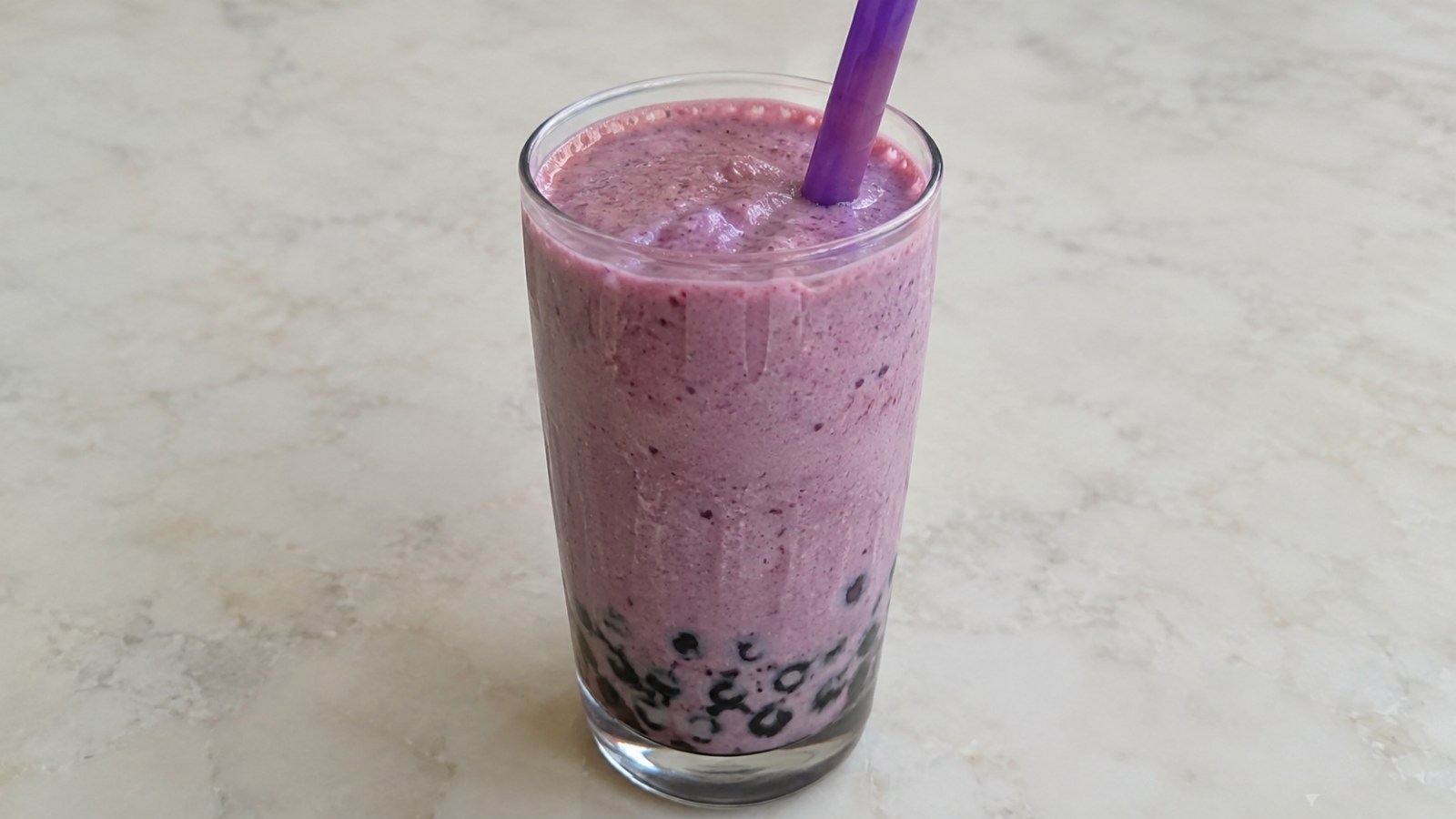
Few drinks are as fun as a thick, fruity smoothie with chewy tapioca pearls waiting at the bottom of the cup. Boba shops charge a lot for them, and the quality can swing from perfect to disappointing. The good news is that you can recreate the same experience in your own kitchen with a blender, a pot, and a handful of simple ingredients. This guide shows you how to make a boba smoothie that tastes fresh, blends smoothly, and keeps those pearls soft and bouncy from the first sip to the last.
Key Takeaways
- Boba smoothies combine a blended fruit base with cooked tapioca pearls, so you need to prepare two components that come together at the end.
- Freshly cooked pearls make the biggest difference in texture, and they are best used within a few hours.
- Frozen fruit and a little liquid create a thick, creamy smoothie without watering down the flavor.
- A brown sugar syrup coating adds depth and keeps the pearls from sticking together.
- You can customize the recipe with almost any fruit, milk, or sweetener, including dairy-free and lower-sugar options.
What Is a Boba Smoothie?
A boba smoothie is a blended, slushy-style drink that includes tapioca pearls, sometimes called boba, at the bottom or mixed throughout. It differs from classic bubble tea because bubble tea starts with brewed tea, while a smoothie starts with fruit, ice, or yogurt. The result is thicker, colder, and often sweeter, which makes it a popular choice for warm days and for anyone who is not a fan of tea.
The pearls themselves are made from cassava starch. When cooked properly, they turn translucent, soft, and pleasantly chewy. Their mild flavor soaks up whatever syrup you pair them with, which is why brown sugar is such a common partner.
Part of the appeal is the contrast. The smoothie is cold, creamy, and smooth, while the pearls are warm or room temperature and satisfyingly chewy. Getting that contrast right is what separates a great homemade version from a mediocre one.
Ingredients You Will Need
The ingredient list is short, and most items are easy to find. Here is what to gather for two large servings.
For the tapioca pearls:
- 1/2 cup dried black tapioca pearls (the quick-cooking type is easiest for beginners)
- 4 cups water for boiling
- 1/4 cup brown sugar
- 1/4 cup hot water for the syrup
For a classic strawberry-banana smoothie base:
- 1 1/2 cups frozen strawberries
- 1 ripe banana, preferably frozen in chunks
- 1 cup milk of your choice
- 1/2 cup plain or vanilla yogurt
- 1 to 2 tablespoons honey or sweetener, to taste
- A handful of ice if you want a frostier texture
You can swap the fruit for mango, peach, pineapple, or mixed berries. The same ratios work for nearly any combination, which makes this a flexible template rather than a strict recipe.
Equipment Checklist
You do not need anything fancy, but a few tools make the process smoother.
A medium saucepan is needed for boiling the pearls, and a slotted spoon or fine mesh strainer helps you lift them out. A small bowl works for the brown sugar syrup. A decent blender is the most important piece of equipment, since frozen fruit can be tough on weaker motors. If your blender struggles, let the fruit sit out for five minutes before blending, or add a splash more liquid.
Finally, grab two tall glasses and extra wide straws. Standard straws will not let the pearls through, and sipping a boba smoothie without being able to catch the pearls is a frustrating experience.
Step One: Cook the Tapioca Pearls
Cooking the pearls correctly is the part that most beginners worry about, but it is straightforward once you know the rhythm.
Bring 4 cups of water to a rolling boil in a medium saucepan. A large volume of water matters because the pearls release starch as they cook, and too little water causes them to clump. Once the water is bubbling vigorously, add the pearls and stir gently for the first 30 seconds. They will sink at first, then float to the surface as they cook.
Reduce the heat to medium and cover the pot. Cook according to the package directions, which usually range from 5 to 30 minutes depending on the brand. Quick-cooking pearls need only about 5 to 7 minutes, while traditional pearls often take 20 to 30 minutes plus a resting period. Stir every few minutes so nothing sticks to the bottom.
When the time is up, turn off the heat and let the pearls rest in the hot water, covered, for another 5 to 10 minutes. This resting stage finishes the cooking inside each pearl so the center becomes soft instead of hard or chalky. Taste one to check. It should be tender and chewy, with no dry core.
Step Two: Sweeten and Soak the Pearls
Plain cooked pearls taste fairly bland, so this step brings them to life.
While the pearls rest, stir together 1/4 cup of brown sugar with 1/4 cup of hot water in a small bowl until the sugar fully dissolves. For a deeper, more caramel-like flavor, simmer the sugar and water in a small pot for two to three minutes until it thickens slightly.
Drain the pearls and give them a quick rinse under cool water. This stops the cooking and removes extra surface starch, which prevents sticking. Transfer them to the syrup and stir to coat. Let them soak for at least 10 minutes, though 20 minutes gives an even richer flavor.
The syrup also serves a practical purpose. A thin coating keeps the pearls separated and glossy, and it flavors every bite. If you like a more dramatic look, drizzle some syrup around the inside of your glass before adding the pearls, creating the tiger stripe pattern seen in many boba shops.
Step Three: Blend the Smoothie Base
With the pearls soaking, move on to the smoothie. Order matters in a blender, so add your ingredients in layers for the smoothest result.
Pour the milk into the blender first, followed by the yogurt and sweetener. Add the banana and frozen strawberries on top, and finish with ice if you are using it. Placing liquids at the bottom helps the blades catch the frozen fruit without stalling.
Start on low speed for about 10 seconds, then increase to high and blend for 45 to 60 seconds. Stop and scrape down the sides if you see chunks sticking. The finished smoothie should be thick enough to hold a spoon upright for a moment but still pour slowly.
Taste before you serve it. If it needs more sweetness, add a teaspoon of honey and pulse once or twice. If it is too thick, add a splash of milk. If it is too thin, toss in a few more frozen fruit pieces or a small handful of ice.
Step Four: Assemble and Serve
Assembly is the fun part, and it only takes a minute.
Spoon a generous portion of syrup-soaked pearls into the bottom of each glass, about 1/4 cup per serving. If you want the pearls evenly spread, stir a few into the smoothie itself, but keep most of them at the bottom for the classic look. Pour the blended smoothie slowly over the pearls so they stay in place.
Serve immediately with a wide boba straw and a long spoon. The smoothie is at its best when it is cold and thick, so avoid letting it sit for too long. If you are serving guests, blend in batches rather than making a huge pitcher, since the texture softens as the smoothie warms up.
Popular Flavor Variations
Once you master the basic method, the possibilities are endless. Here are some favorites to try.
Mango Coconut: Blend 2 cups of frozen mango with 1 cup of coconut milk and a teaspoon of lime juice. This one tastes tropical and pairs beautifully with brown sugar pearls.
Taro Dream: Combine 2 tablespoons of taro powder with 1 frozen banana, 1 cup of milk, and a handful of ice. The flavor is nutty, vanilla-like, and gently sweet, with a soft purple color.
Matcha Banana: Blend 1 frozen banana, 1 teaspoon of matcha powder, 1 cup of oat milk, and a drizzle of honey. It has an earthy taste balanced by natural sweetness.
Peach Green Tea: Brew a cup of green tea, chill it, and use it as the liquid with frozen peaches. This version sits between a smoothie and a fruit tea, and it is wonderfully refreshing.
Chocolate Peanut Butter: Blend a frozen banana with 2 tablespoons of peanut butter, 1 tablespoon of cocoa powder, and 1 cup of milk. It tastes like dessert in a glass.
Mixed Berry Yogurt: Use frozen blueberries, raspberries, and strawberries with vanilla yogurt for a tangy, antioxidant-rich option.
Tips for the Best Texture
A few small habits can make a noticeable difference in your results.
Use frozen fruit. Frozen fruit creates a thick, frosty smoothie without diluting the flavor the way ice can. If you only have fresh fruit, freeze it on a tray for a few hours first.
Cook pearls fresh. Tapioca pearls are at their best within about four hours of cooking. After that, they begin to harden and lose their chew. Never refrigerate cooked pearls, as the cold makes them firm and gritty.
Do not skip the resting time. Letting the pearls sit in the hot water after boiling is what produces the soft center. Rushing this step is the most common cause of crunchy pearls.
Balance sweetness carefully. The pearls and syrup already add sugar, so you may need less sweetener in the smoothie than you expect. Taste first, then adjust.
Chill your glasses. A cold glass keeps the smoothie thick for longer, especially in warm weather.
Common Mistakes to Avoid
Even experienced home cooks run into a few predictable problems with this drink.
Using too little water to boil the pearls leads to a sticky, gluey mass. Always use plenty of water and stir early. Overcooking can make the pearls mushy and cause them to dissolve slightly, so follow the package timing closely and test one before draining.
Another frequent mistake is blending the smoothie too early. If you blend and then spend ten minutes preparing the pearls, the smoothie will melt and separate. Cook the pearls first, then blend right before serving.
Finally, many people forget about the straw. Narrow straws clog immediately, so keep a pack of wide boba straws on hand. They are inexpensive and make the whole experience better.
Dairy-Free and Healthier Options
This drink adapts easily to different diets and preferences.
For a dairy-free version, replace the milk and yogurt with almond, oat, soy, or coconut milk and a plant-based yogurt. Coconut milk gives the creamiest result, while oat milk offers a neutral, slightly sweet flavor that works with nearly any fruit.
To reduce sugar, use very ripe bananas or dates as natural sweeteners and cut the brown sugar syrup in half. You can also soak the pearls in a lighter syrup made with maple syrup or honey. Another option is to use fewer pearls and add chia seeds for a similar bubbly texture with more fiber.
Storing and Making Ahead
Boba smoothies are best enjoyed fresh, but you can prepare some elements in advance to save time.
The smoothie base can be portioned into freezer bags, with the fruit, banana, and any add-ins ready to go. When you want a drink, just pour the contents into the blender with milk and blend. This is a great strategy for busy mornings or for hosting a group.
The pearls are trickier. Cooked pearls can sit at room temperature in their syrup for up to four hours, covered with a damp cloth or lid. After that, the texture declines. If you want to prepare ahead, cook only as many pearls as you need and keep the uncooked pearls stored in a sealed container in a cool, dry pantry, where they last for months.
Frequently Asked Questions
Can I use regular sugar instead of brown sugar for the pearls?
Yes, white sugar works, but brown sugar gives a richer, caramel-like taste that suits the pearls better. If you only have white sugar, add a teaspoon of molasses or maple syrup to the syrup to get a similar flavor.
Why are my tapioca pearls hard in the center?
Hard centers usually mean the pearls were undercooked or did not rest long enough. Return them to hot water, cover the pot, and let them sit for another 10 minutes. Always taste one before draining.
Can I make boba smoothies without a blender?
It is difficult to get a thick texture without one, but you can use a food processor or an immersion blender with a tall container. Cut frozen fruit into smaller pieces and add extra liquid to help the blades work.
How long do cooked tapioca pearls last?
Cooked pearls are best within four hours at room temperature. After that, they harden and lose their chew. Avoid the refrigerator, because cold temperatures make them tough and grainy.
Are boba smoothies healthy?
They can be a nutritious treat when made with whole fruit, minimal added sugar, and a protein-rich base. The pearls add mostly carbohydrates, so enjoy them in moderation and balance the drink with fiber and protein.
Making this treat at home is easier than most people expect, and it quickly becomes a favorite once you see how customizable it is. With fresh pearls, a thick fruity blend, and a little brown sugar syrup, you can recreate a cafe favorite for a fraction of the price. Learning how to make a boba smoothie takes just a few tries to perfect, and from there you can experiment with your own flavor combinations, sweetness levels, and toppings until you have a signature drink worth sharing.