
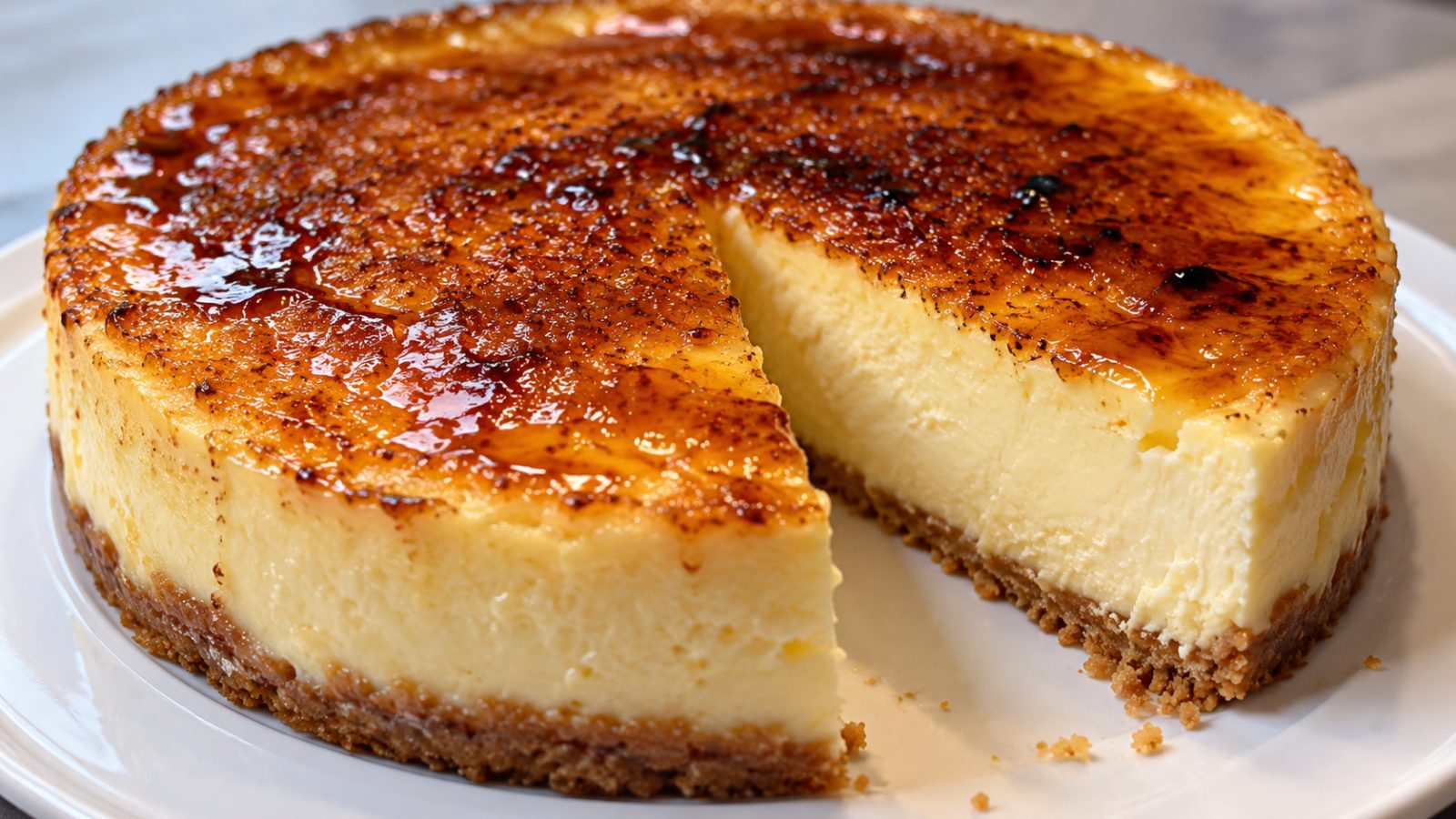
This dessert combines a dense, silky vanilla cheesecake with the defining feature of classic crème brûlée: a thin layer of caramelized sugar that cracks under the spoon. The texture depends on gentle baking, controlled cooling, and enough chilling time for the filling to set without becoming dry or grainy.
For the best result, use full-fat cream cheese at room temperature, mix the filling at low speed once the eggs are added, and bake the cheesecake in a water bath. The brûléed sugar belongs on the cheesecake shortly before serving; refrigerating the caramelized top for hours will soften the crisp shell.
Ingredients
For the crust
- 2 cups (200 g) graham cracker crumbs or finely crushed digestive biscuits
- 3 tablespoons granulated sugar
- 6 tablespoons (85 g) unsalted butter, melted
- Pinch of fine salt
For the cheesecake filling
- 32 oz (900 g) full-fat cream cheese, softened to room temperature
- 1 cup (200 g) granulated sugar
- 1 tablespoon cornstarch
- 1/4 teaspoon fine salt
- 1 cup (240 g) sour cream, room temperature
- 2 teaspoons pure vanilla extract or vanilla bean paste
- 4 large eggs, room temperature
- 2 large egg yolks, room temperature
- 1/2 cup (120 ml) heavy cream, room temperature
For the brûlée topping
- 1/3 cup (65 g) superfine or granulated sugar
How to Make Crème Brûlée Cheesecake
Step 1: Prepare and Bake the Crust
Heat the oven to 350°F (175°C). Lightly grease a 9-inch springform pan and line the bottom with parchment paper.
Mix the cracker crumbs, sugar, melted butter, and salt until the crumbs resemble damp sand. Press the mixture firmly and evenly over the bottom of the pan. A flat-bottomed measuring cup helps compress the crust into a tight layer.
Bake for 8 to 10 minutes, until lightly golden and fragrant. Remove the pan from the oven and let the crust cool while you make the filling.
Reduce the oven temperature to 325°F (165°C).
Wrap the outside of the springform pan with two layers of heavy-duty aluminum foil, making sure the foil reaches well above the bottom seam. This protects the cheesecake from water during baking. For extra protection, place the wrapped springform pan inside a slightly larger cake pan before setting it into the water bath.
Step 2: Mix the Cheesecake Filling
Beat the softened cream cheese on low to medium-low speed until completely smooth. Scrape the bowl thoroughly, especially around the bottom where small lumps tend to hide.
Combine the sugar, cornstarch, and salt, then add them gradually to the cream cheese. Mix only until smooth.
Add the sour cream, vanilla, and heavy cream. Mix on low speed until evenly incorporated.
Add the eggs one at a time, followed by the egg yolks. Keep the mixer on its lowest setting and stop as soon as each egg disappears into the batter. Excessive mixing at this stage traps air, which can make the cheesecake rise dramatically in the oven and crack as it cools.
Pour the filling over the cooled crust. Tap the pan gently against the counter several times to release large air bubbles.
Place the cheesecake in a deep roasting pan. Pour hot water into the roasting pan until it reaches roughly halfway up the side of the cheesecake pan.
Step 3: Bake, Chill, and Caramelize the Top
Bake at 325°F (165°C) for 70 to 85 minutes. The outer 2 to 3 inches should look set, while the center should still wobble slightly when the pan is moved. The center should not look liquid.
For greater precision, check the internal temperature near the center with an instant-read thermometer. A cheesecake is generally ready around 150°F (65°C). Avoid pushing the temperature much higher, since overbaking produces a firmer, drier texture.
Turn off the oven, crack the door open, and leave the cheesecake inside for 30 minutes. Remove it from the water bath and let it cool at room temperature for another hour.
Run a thin knife around the edge if the cheesecake appears attached to the pan, but leave it in the springform mold. Refrigerate for at least 6 hours, preferably overnight.
Once thoroughly chilled, remove the cheesecake from the pan.
Just before serving, blot away any visible surface moisture with a clean paper towel. Sprinkle a thin, even layer of sugar over the top. You want enough sugar to form a continuous shell without creating a thick layer that becomes difficult to crack.
Use a kitchen torch to melt the sugar. Keep the flame moving continuously, working in small circles until the sugar bubbles and turns deep amber. Avoid holding the flame in one spot, which can scorch the sugar before the surrounding crystals melt.
Let the caramel sit for 2 to 3 minutes until hard.
A properly finished Crème Brûlée Cheesecake should give you three distinct textures in one forkful: brittle caramel on top, cool custard-like cheesecake underneath, and a crisp buttery crust at the base.
For clean slices, use a sharp knife dipped in hot water and wiped dry before every cut. Press straight through the caramel rather than sawing aggressively, which can shatter the topping across neighboring slices.
What to Serve With Crème Brûlée Cheesecake
Keep accompaniments restrained because the cheesecake is already rich and sweet. Tart or bitter flavors work especially well.
Fresh raspberries, strawberries, blackberries, or sliced blood orange add acidity without competing with the vanilla filling. A small spoonful of raspberry coulis also works, provided it is not excessively sweet.
Espresso, strong black coffee, or unsweetened tea provides useful bitterness against the caramelized sugar. For a plated dessert, add a few berries and a very small amount of fruit sauce beside the slice rather than pouring sauce over the brûléed surface. Moisture quickly destroys the crisp caramel shell.
Avoid heavy whipped toppings, thick caramel sauce, or very sweet ice cream. They tend to bury the contrast between the brittle sugar crust and the creamy filling.
Crème Brûlée Cheesecake Nutrition Information
Approximate nutrition per serving, based on 12 slices:
- Calories: 620
- Protein: 9 g
- Carbohydrates: 48 g
- Fat: 44 g
- Saturated fat: 25 g
- Sugar: 34 g
- Sodium: 390 mg
Nutrition values vary with the brand of cream cheese, biscuits, sour cream, and portion size used.
FAQs
Why did my cheesecake crack?
Cracks usually come from overbaking, excessive air in the batter, or cooling the cheesecake too quickly. Mix slowly after adding the eggs, remove the cheesecake while the center still has a gentle wobble, and cool it gradually.
A crack does not ruin the dessert. The caramelized sugar topping can cover minor surface cracks effectively.
Do I really need a water bath?
A water bath gives the cheesecake a gentler, more humid baking environment. That reduces rapid temperature changes around the edges and helps the filling bake evenly.
You can bake without one, but the edges are more likely to become firm before the center finishes cooking.
Can I make the cheesecake without a kitchen torch?
Yes. Chill the cheesecake thoroughly, then place it briefly under a very hot broiler after adding the sugar. Watch constantly because the sugar can move from caramelized to burned within seconds.
A torch gives better control and heats the cheesecake less, so it remains the preferred method.
What is the best sugar for the brûlée topping?
Superfine white sugar caramelizes quickly and evenly. Regular granulated sugar also works well.
Avoid coarse raw sugar for this application. Its large crystals require more heat and can create an uneven, overly thick crust.
Why isn’t my sugar topping getting crisp?
The cheesecake surface may be wet, the sugar layer may be too thick, or the sugar may not have fully melted.
Blot the chilled surface dry before adding sugar. Use a thin, even coating and torch it until the crystals liquefy and develop an amber color. Let the caramel cool completely before touching it.
Can I caramelize the sugar ahead of time?
Only shortly ahead. The caramel shell gradually absorbs moisture from the cheesecake and refrigerator air, causing it to soften.
For the sharpest crack, caramelize the sugar within about 10 to 30 minutes of serving.
How long does the cheesecake need to chill?
Six hours is the practical minimum. Overnight chilling gives better structure, cleaner slices, and a more developed vanilla flavor.
Do not brûlée the top before the overnight chill. Add the sugar and caramelize it only after the cheesecake is fully cold.
How long will leftovers keep?
Store leftover cheesecake covered in the refrigerator for up to 4 days. The cheesecake itself keeps well, but the caramelized topping will gradually lose its crisp texture.
For make-ahead preparation, refrigerate the cheesecake without its sugar topping and brûlée individual portions as needed.
Can I freeze it?
Yes. Freeze the cheesecake before adding the brûlée topping. Chill it completely, wrap it tightly in plastic wrap and foil, and freeze for up to 2 months.
Thaw it overnight in the refrigerator. Once thawed, uncover the surface, remove any condensation, add the sugar, and caramelize immediately before serving.
How do I know when the cheesecake is baked properly?
Look at the movement in the center rather than waiting for the entire surface to become rigid. The outer section should be set, while the center should move as one soft piece when gently shaken.
If the middle sloshes like liquid batter, it needs more time. If the entire cheesecake is completely firm while still in the oven, it has probably baked too long.