
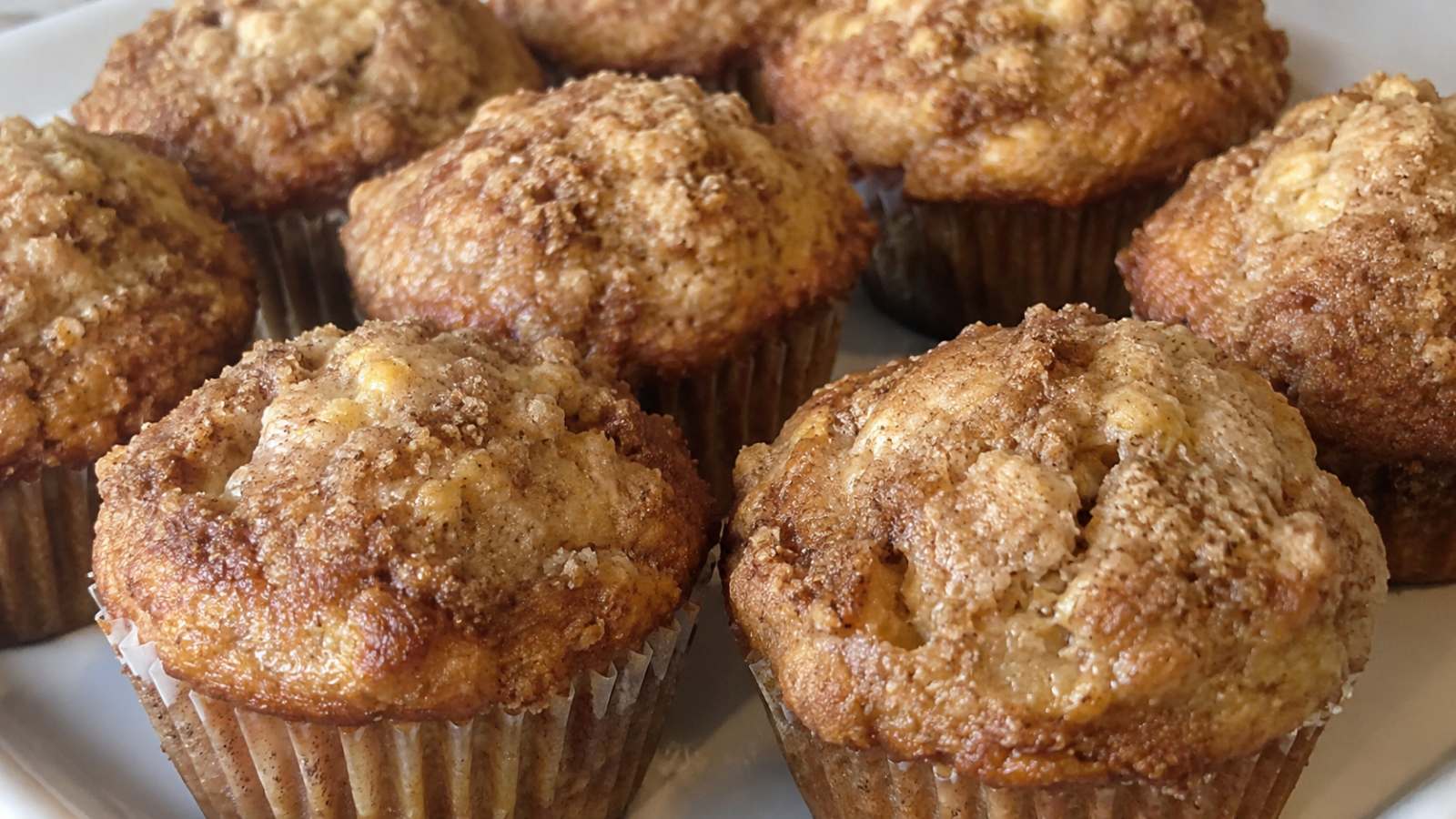
There is a particular smell that fills a kitchen when something spiced and apple-rich is baking, and these muffins deliver it in full. If you have ever wished you could capture the taste of a warm cup of cider in a handheld treat, this is the recipe for you. The secret is reducing fresh cider into a thick, concentrated syrup that goes straight into the batter, giving every bite a deep, tangy apple flavor. Add a crisp cinnamon sugar crust and you have a muffin that tastes like an orchard visit.
Key Takeaways
- Reducing the cider on the stove concentrates its flavor, which is the single biggest step toward a muffin that tastes like apples instead of plain spice cake.
- A short blast of high oven heat at the start creates tall, domed tops with a bakery-style look.
- Dipping the warm muffins in melted butter and cinnamon sugar gives a crackly, doughnut-like coating.
- The batter can be mixed in one bowl and one saucepan, and the muffins freeze beautifully for up to three months.
- Do not overmix. A lumpy batter produces a tender, soft crumb.
Why This Recipe Works So Well
Many apple muffin recipes rely on chopped apples alone for flavor. The trouble is that fresh apples are mostly water, and their taste gets diluted once they are folded into a sweet, buttery batter. You end up with a muffin that is pleasant but not memorable.
This recipe attacks the problem from two directions. First, you simmer apple cider until it shrinks to a quarter of its original volume. Cider is already more flavorful than clear apple juice because it is unfiltered and often slightly tart, and reducing it turns it into something close to a syrup. That syrup carries sweetness, acidity, and an almost caramel-like depth into the crumb.
Second, you add a small amount of finely diced fresh apple for texture and little pockets of juiciness. Together, the reduced cider and the diced fruit give you layered apple flavor rather than a single note.
A few other choices make a difference. Brown sugar adds moisture and a gentle molasses taste that pairs naturally with cider. Greek yogurt or sour cream keeps the crumb tender and adds a slight tang that brightens the spices. Melted butter, rather than creamed butter, makes the batter easy to mix by hand and gives a rich, moist texture.
Ingredients You Will Need
For the Reduced Cider
- 2 cups fresh apple cider (unfiltered, not sparkling)
For the Muffins
- 2 cups all-purpose flour (about 250 grams)
- 2 teaspoons baking powder
- 1/2 teaspoon baking soda
- 1/2 teaspoon fine salt
- 1 teaspoon ground cinnamon
- 1/2 teaspoon ground nutmeg
- 1/4 teaspoon ground ginger
- 1/2 cup unsalted butter, melted and slightly cooled
- 3/4 cup packed light brown sugar
- 1 large egg, at room temperature
- 1/2 cup plain Greek yogurt or sour cream
- 1/4 cup whole milk
- 1 teaspoon vanilla extract
- 1 cup finely diced apple, peeled or unpeeled (about 1 medium apple)
For the Cinnamon Sugar Topping
- 1/3 cup granulated sugar
- 1 teaspoon ground cinnamon
- 4 tablespoons unsalted butter, melted
Choosing the Right Apples and Cider
Your ingredients matter more here than in a heavily frosted bake, so it is worth choosing well.
For the cider, look for fresh, refrigerated, unfiltered cider from a farm stand or the cold section of your grocery store. Shelf-stable apple juice will work in a pinch, but the flavor will be flatter and sweeter. Avoid hard (alcoholic) cider, which behaves very differently when reduced.
For the diced apple, pick a variety that holds its shape and has some tartness. Granny Smith, Honeycrisp, Braeburn, and Pink Lady are all excellent. Softer varieties such as McIntosh tend to turn mushy and disappear into the batter. Dice the pieces small, roughly the size of a pea or a small corn kernel, so they distribute evenly and bake through without making the muffins soggy.
Step-by-Step Instructions
Step 1: Reduce the Cider
Pour the 2 cups of cider into a medium saucepan and bring it to a boil over medium-high heat. Lower the heat slightly so it keeps a steady, active simmer. Cook for 18 to 25 minutes, stirring occasionally, until the liquid has reduced to about 1/2 cup. It should look slightly syrupy and coat the back of a spoon.
Pour it into a heatproof bowl and let it cool for at least 15 minutes. Adding hot syrup to the batter could scramble the egg, so patience is important. You can make the reduction a day or two ahead and store it in the fridge, which is a great time saver.
Step 2: Prepare the Oven and Pan
Position a rack in the center of the oven and preheat to 425 degrees Fahrenheit (220 degrees Celsius). Line a 12-cup muffin tin with paper liners, or grease each cup thoroughly. Greasing the top surface of the pan also helps if your muffin tops spread slightly.
Step 3: Mix the Dry Ingredients
In a large bowl, whisk together the flour, baking powder, baking soda, salt, cinnamon, nutmeg, and ginger. Whisk for a full 30 seconds to evenly distribute the leaveners and spices. Uneven spice distribution leads to bitter pockets in some muffins and bland ones in others.
Step 4: Mix the Wet Ingredients
In a second bowl, whisk the melted butter and brown sugar together until smooth. Add the egg and whisk until the mixture looks glossy. Stir in the yogurt, milk, vanilla, and the cooled cider reduction. The mixture should look a little thick and fully combined.
Step 5: Combine Gently
Pour the wet ingredients over the dry ingredients. Using a rubber spatula, fold just until you no longer see streaks of flour. A few small lumps are perfectly fine. Add the diced apple and give the batter two or three more gentle folds.
This step is where many home bakers go wrong. Stirring too much develops gluten, which makes muffins tough, chewy, and full of tunnels. Stop as soon as the flour disappears.
Step 6: Fill the Muffin Cups
Divide the batter evenly among the 12 cups, filling each one nearly to the top. A large cookie scoop makes this fast and tidy. Filling them generously is what gives you those tall, rounded bakery domes.
Step 7: Bake in Two Stages
Place the pan in the hot oven and bake at 425 degrees for 5 minutes. Without opening the door, reduce the temperature to 350 degrees Fahrenheit (175 degrees Celsius) and continue baking for 15 to 17 minutes. The muffins are done when the tops spring back lightly and a toothpick inserted in the center comes out clean or with a few dry crumbs.
The initial high heat causes the batter to rise rapidly before the structure sets, which is what creates the lofty tops. Lowering the temperature then lets the centers cook through without burning the edges.
Step 8: Add the Cinnamon Sugar Coating
Let the muffins cool in the pan for about 5 minutes. While they cool, stir the granulated sugar and cinnamon together in a shallow bowl and melt the butter in another. Remove each muffin from the pan, brush or dip the top in melted butter, then roll it in the cinnamon sugar. Place them on a wire rack to cool slightly before serving.
The coating should be applied while the muffins are still warm so the butter soaks in a little and the sugar sticks. The result is a sweet, crunchy shell that contrasts beautifully with the soft interior.
Tips for Bakery-Style Results
Do not skip the reduction. It may seem like an extra step, but it is the heart of the recipe. Using unreduced cider would add too much liquid and dilute the flavor.
Measure flour carefully. Spoon the flour into your measuring cup and level it off rather than scooping directly from the bag. Packed flour leads to dry, dense muffins. A kitchen scale is the most reliable option.
Use room temperature ingredients. Cold eggs and yogurt can cause the melted butter to clump. Letting them sit out for 20 to 30 minutes helps the batter come together smoothly.
Rest the batter if you have time. Letting the batter sit for 10 to 15 minutes before baking allows the flour to hydrate fully, which can improve both dome height and crumb tenderness.
Check for doneness early. Ovens vary widely. Start testing at the 15-minute mark of the lower-temperature stage so you do not overbake them. Overbaked muffins turn dry and lose their apple flavor.
Delicious Variations to Try
Once you have the base recipe down, it is easy to customize.
Streusel topped. Skip the cinnamon sugar dip and sprinkle a crumb topping of flour, butter, brown sugar, and oats over the batter before baking.
Maple walnut. Replace half of the brown sugar with pure maple syrup and fold in 1/2 cup of toasted chopped walnuts.
Caramel apple. Press a soft caramel candy into the center of each muffin before baking for a gooey surprise.
Whole wheat blend. Swap up to half of the all-purpose flour for white whole wheat flour for a nuttier, more rustic muffin. You may need an extra tablespoon of milk.
Dairy-free. Use coconut oil in place of butter, a plant-based yogurt, and unsweetened oat or almond milk. The texture will be slightly different but still pleasant.
Spiced chai twist. Add a pinch of cardamom and cloves to the dry ingredients for a warming, chai-inspired flavor.
Common Mistakes and How to Fix Them
If your muffins did not turn out quite right, one of these culprits is likely to blame.
Flat tops. This usually points to old baking powder or an oven that was not fully preheated. Check the expiration date on your leaveners and use an oven thermometer to confirm the temperature.
Dense or rubbery texture. The batter was probably overmixed. Fold gently and stop early next time.
Soggy bottoms or gummy centers. Too much moisture is the usual cause. Make sure your cider has reduced fully and that your apple pieces are small and patted dry.
Sinking in the middle. Opening the oven door too early or underbaking can cause the center to collapse. Wait until at least the 12-minute mark of the second stage before checking.
Bland flavor. Check that your spices are fresh. Ground cinnamon and nutmeg lose potency after about a year. Also confirm you reduced the cider properly.
How to Store and Freeze
Room temperature. Store the muffins in an airtight container at room temperature for up to two days. Place a folded paper towel on the bottom and another on top to absorb extra moisture, which keeps the cinnamon sugar coating from getting soggy.
Refrigerator. For longer storage, keep them in the fridge for up to five days. Bring them to room temperature or warm them briefly before serving.
Freezer. Wrap each cooled muffin individually in plastic wrap, then place them in a freezer bag. They keep well for up to three months. Thaw overnight on the counter, or microwave for 20 to 30 seconds. For the best texture, reheat in a 300 degree oven for 8 to 10 minutes.
If you plan to freeze them, consider adding the cinnamon sugar coating after thawing and reheating. This keeps the crust crisp and fresh.
Serving Ideas
These muffins are lovely on their own, but a few pairings take them further. Serve them warm with a smear of salted butter or a spoonful of cream cheese. They pair wonderfully with hot coffee, black tea, or a mug of warm cider. For a brunch spread, set them beside a bowl of Greek yogurt with honey and a platter of sharp cheddar slices, a classic New England combination that highlights the sweet and savory sides of apples.
They also make a thoughtful gift. Pack a half dozen in a parchment-lined box, tie it with twine, and tuck in a cinnamon stick for an easy homemade present during the holidays.
Frequently Asked Questions
Can I use apple juice instead of cider?
Yes, but the flavor will be milder and sweeter. Reduce it the same way, and consider adding a teaspoon of lemon juice to the reduction to add back some of the tartness that cider naturally provides.
Can I make the batter ahead of time?
You can refrigerate the batter overnight, but the baking powder will lose some strength. For the best rise, mix the wet and dry ingredients separately and combine them just before baking.
Why did my muffins stick to the paper liners?
This often happens when muffins are cooled in the pan too long or when the liners are low quality. Lightly spray the liners with cooking spray, or remove the muffins from the tin after five minutes.
Can I double the recipe?
Absolutely. Reduce 4 cups of cider in a wider pot so it cooks down evenly, and bake the muffins in batches. Keep the second batch of batter covered until the first pan has finished baking.
Do I need to peel the apples?
No. The skin softens as it bakes and adds a little color and fiber. If you prefer a perfectly smooth texture, peel them first.
Can I use a mini muffin tin?
Yes. Fill the cups about three quarters full and bake at 350 degrees for 10 to 12 minutes, skipping the high heat stage. You will get about 36 mini muffins.
When the autumn air turns crisp and you want something comforting from the oven, nothing beats a batch of homemade Apple Cider Muffins fresh from the oven, still warm and rolled in cinnamon sugar. Keep the cider reduction on hand, mix gently, bake with a hot start, and you will have tall, tender, deeply flavored muffins every single time. Share them with friends, freeze a few for busy mornings, and enjoy the season one bite at a time.