
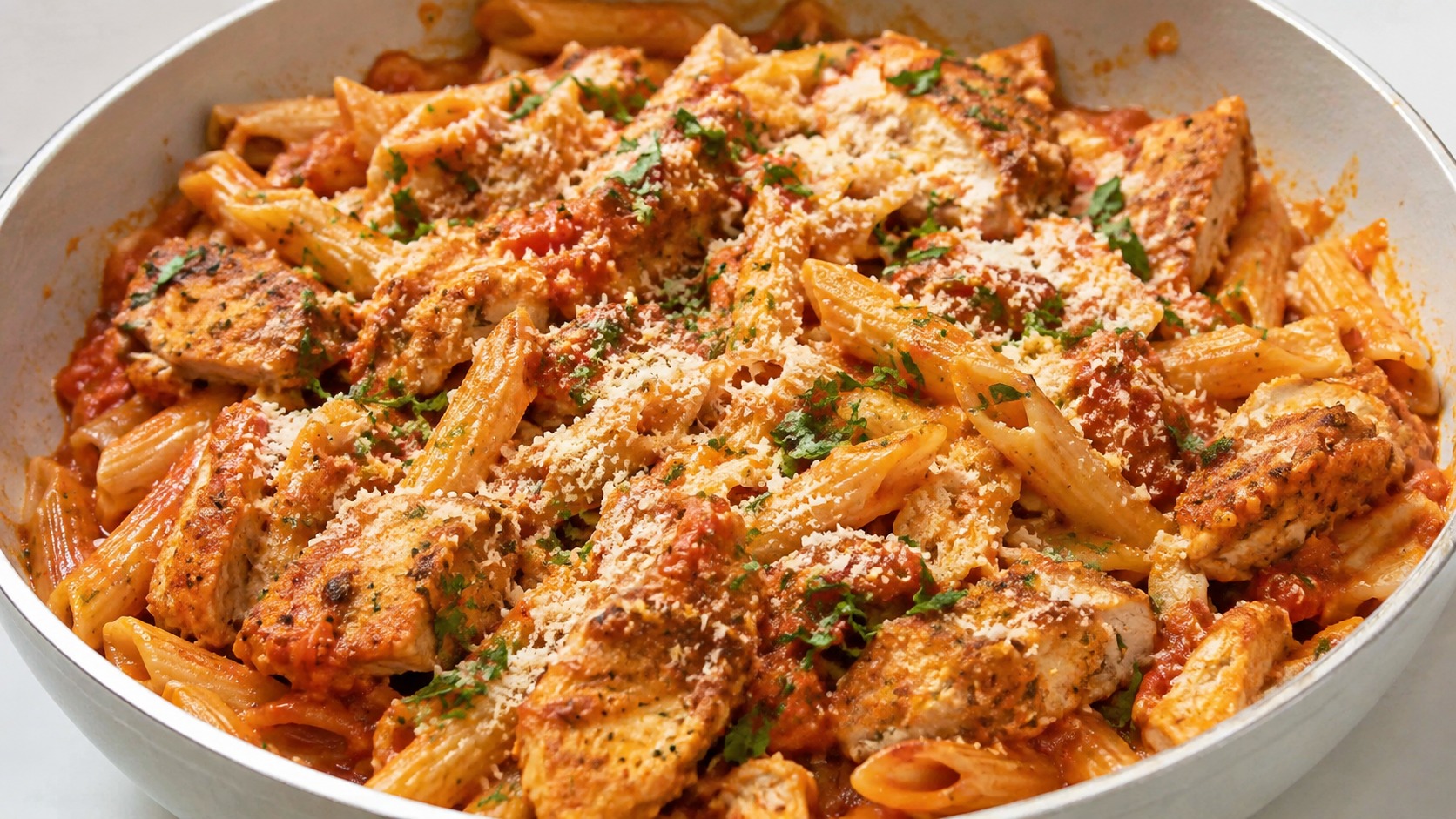
One pot chicken parmesan pasta is about to become your new weeknight favorite. This dish takes everything you love about the Italian American classic, tender chicken, rich tomato sauce, melted mozzarella, and a generous dusting of parmesan, and folds it into a single skillet with pasta cooked right in the sauce. The result is a creamy, hearty, restaurant quality meal that comes together in under 40 minutes with minimal cleanup.
This recipe is perfect for busy families, meal preppers, and anyone who wants a satisfying dinner without babysitting multiple pots on the stove. The pasta absorbs the flavor of the tomato sauce as it simmers, the chicken stays juicy because it cooks alongside everything else, and the cheese melts into every bite. Below, we’ll walk through everything you need to know, from ingredients and step by step instructions to variations, storage tips, and answers to the most common questions readers ask about this dish.
Key Takeaways
- One pot meals mean less cleanup and more flavor, since the pasta cooks directly in the seasoned sauce and soaks up every bit of it.
- Using boneless chicken breast or thighs keeps the dish quick to prepare and easy to cut into bite sized pieces.
- A blend of mozzarella and parmesan gives you the best of both worlds: melty texture and sharp, salty flavor.
- This dish reheats well, making it a great option for meal prep or next day lunches.
- You can easily swap ingredients based on what you have, making it a flexible pantry friendly recipe.
Why This Recipe Works So Well
The magic of a one pan dinner lies in how the starch from the pasta thickens the sauce as it cooks. Instead of boiling noodles separately and combining them with sauce later, everything simmers together in chicken broth and crushed tomatoes. This method allows the pasta to release starch directly into the liquid, creating a naturally creamy, cling-to-every-noodle texture without needing heavy cream or a separate roux.
Chicken parmesan traditionally involves breading and frying cutlets, then baking them under a blanket of sauce and cheese. While delicious, that process takes time and creates extra mess. This simplified version keeps the same flavor profile, garlicky tomato sauce, melted cheese, herby undertones, but skips the breading and frying steps. Instead, seared chicken pieces are simmered directly in the sauce, which keeps the meat tender and infuses it with flavor from the inside out.
Ingredients You’ll Need
Here’s what typically goes into this dish. Quantities can be adjusted based on how many servings you want to make, but this gives you a good baseline for a family sized meal.
- Boneless, skinless chicken breasts or thighs, cut into bite sized pieces
- Olive oil for searing
- Garlic, minced
- Yellow onion, diced
- Crushed tomatoes or marinara sauce
- Chicken broth
- Italian seasoning, oregano, and basil
- Red pepper flakes, optional for a bit of heat
- Short pasta such as penne, rotini, or rigatoni
- Shredded mozzarella cheese
- Grated parmesan cheese
- Fresh basil or parsley for garnish
- Salt and black pepper to taste
Short pasta shapes work best because they hold sauce well and cook evenly in the skillet. Long noodles like spaghetti can clump together and are harder to stir into a one pan setup.
Step by Step Instructions
Step 1: Sear the chicken. Heat olive oil in a large, deep skillet or Dutch oven over medium high heat. Season the chicken pieces with salt, pepper, and a pinch of Italian seasoning, then sear until golden on the outside, about 4 to 5 minutes. The chicken doesn’t need to be fully cooked through at this stage since it will finish cooking in the sauce.
Step 2: Build the aromatic base. Remove the chicken temporarily if needed, then add diced onion to the same pan. Cook until softened, about 3 minutes, then stir in the minced garlic and cook for another 30 seconds until fragrant.
Step 3: Add the sauce and liquid. Pour in the crushed tomatoes and chicken broth, then stir in the Italian seasoning, oregano, basil, and red pepper flakes if using. Bring the mixture to a gentle simmer.
Step 4: Add the pasta and chicken. Return the seared chicken to the pan and stir in the uncooked pasta, making sure it’s mostly submerged in the liquid. Cover and let simmer, stirring occasionally to prevent sticking, until the pasta is tender and the liquid has thickened into a sauce, usually 12 to 15 minutes.
Step 5: Melt the cheese. Once the pasta is cooked and the chicken is fully done, sprinkle mozzarella and parmesan evenly over the top. Cover the pan for a couple of minutes off the heat, allowing the cheese to melt into a gooey layer.
Step 6: Garnish and serve. Top with fresh basil or parsley, an extra sprinkle of parmesan, and serve straight from the pan while everything is hot and bubbling.
Tips for the Best Results
Cutting the chicken into uniform, bite sized pieces helps it cook evenly and makes each forkful easier to eat alongside the pasta. Searing the chicken first, even briefly, adds a layer of flavor that plain boiling can’t replicate.
Stir the pasta occasionally while it simmers so it doesn’t stick to the bottom of the pan. If the sauce reduces too quickly before the pasta is fully tender, add a splash more chicken broth or water to keep things moist.
Freshly grated parmesan melts and blends into a sauce far better than the pre-shredded, shelf stable kind. If possible, buy a wedge and grate it yourself for the creamiest results.
Letting the dish rest for a few minutes after removing it from the heat allows the sauce to thicken slightly and the flavors to settle, making it taste even better by the time you serve it.
Variations to Try
If you want to switch things up, there are several easy ways to customize this dish. Swapping crushed tomatoes for a vodka sauce or arrabbiata base changes the flavor profile while keeping the same cooking method. Adding spinach, mushrooms, or bell peppers in step two boosts the vegetable content without adding extra steps. For a lighter version, ground turkey or shredded rotisserie chicken can replace the seared chicken breast, cutting down on prep time even further.
Those who enjoy a spicier kick can add extra red pepper flakes or a spoonful of chili paste to the sauce. Gluten free pasta can also be used as a direct substitute, though it may require slightly different cooking times, so check the package instructions and adjust the simmering time accordingly.
Storage and Reheating
This dish stores well in an airtight container in the refrigerator for up to four days. Because the pasta continues to absorb liquid as it sits, you may notice the sauce thickens further overnight. When reheating, add a splash of chicken broth or water to loosen the sauce back up, then warm it gently on the stove or in the microwave, stirring occasionally.
Freezing is possible, though the texture of the pasta may soften slightly upon thawing. For best results, freeze in individual portions and thaw overnight in the refrigerator before reheating.
What to Serve Alongside It
Because this dish is rich and filling on its own, it pairs best with something light and fresh. A simple green salad with a lemon vinaigrette cuts through the richness of the cheese and tomato sauce nicely. Garlic bread or a crusty baguette is a classic pairing that’s perfect for soaking up any extra sauce left in the pan. Roasted vegetables, such as broccoli, asparagus, or zucchini, also make a great side since they add color and nutrients without competing with the main dish’s flavor.
For drinks, a light red wine like Chianti complements the tomato base well, while sparkling water with a splash of lemon works as a refreshing non-alcoholic option. If you’re serving this for a family dinner, a simple side of steamed green beans or a Caesar salad rounds out the meal nicely without requiring much extra prep.
Common Mistakes to Avoid
One of the most frequent mistakes people make with this type of dish is not stirring the pasta often enough while it simmers. Because everything cooks together in one pan, pasta can settle at the bottom and stick, leading to uneven cooking or a slightly scorched flavor. Stirring every few minutes helps distribute heat evenly and keeps the noodles from clumping.
Another common issue is adding too much liquid at once, which can make the final dish soupy rather than saucy. It’s better to start with slightly less broth and add more gradually if needed, since the pasta will release starch as it cooks and naturally thicken the sauce. Overcooking the chicken before it goes into the sauce is another pitfall. Since the chicken continues cooking while the pasta simmers, a quick sear at the start is all that’s necessary. Searing it fully before adding it to the pan can lead to dry, rubbery bites by the time the dish is finished.
Finally, adding the cheese too early can cause it to separate or become greasy instead of melting into a smooth, gooey layer. Waiting until the pasta is fully cooked and the heat is turned off or very low before adding the mozzarella and parmesan helps achieve that classic stretchy, melted texture.
Nutritional Considerations
This dish offers a good balance of protein, carbohydrates, and fat, making it a satisfying standalone meal. Chicken provides lean protein that supports muscle maintenance, while the pasta contributes carbohydrates for energy. The cheese adds calcium and a dose of healthy fats, though portion control is worth keeping in mind if you’re watching calorie intake, since cheese and pasta together can add up quickly.
For a lighter version, you can reduce the amount of cheese, use whole wheat or legume based pasta for extra fiber, and load up on vegetables like spinach or zucchini to bulk up the dish without adding significant calories. Using chicken breast instead of thighs also reduces the fat content slightly, though thighs tend to stay juicier throughout the cooking process.
Frequently Asked Questions
Can I use a different type of pasta for this recipe? Yes, short pasta shapes like penne, rotini, ziti, or shells all work well because they hold sauce and distribute evenly in the pan. Long noodles tend to clump and are harder to manage in a one pot method.
Do I need to cook the chicken all the way before adding the pasta? No, a quick sear is enough at that stage. The chicken finishes cooking while it simmers in the sauce alongside the pasta, which also helps keep it juicy and flavorful.
Can I make this dish ahead of time? Yes, it reheats nicely and actually tastes great the next day once the flavors have had time to meld. Just add a little extra liquid when reheating since the sauce thickens as it sits.
What can I substitute for mozzarella cheese? Provolone or a mild Italian cheese blend both work well if you don’t have mozzarella on hand. For a sharper flavor, you can also mix in a bit of fontina.
Is this recipe suitable for meal prepping? Definitely. It divides easily into individual containers, holds up well in the refrigerator for several days, and reheats without losing much of its texture or flavor.
Can I add vegetables to make it more balanced? Yes, spinach, mushrooms, zucchini, or bell peppers can all be stirred in during the sauce building step. They cook down nicely alongside the pasta and add extra nutrients without extra pots or pans.
Whether you’re feeding a hungry family on a weeknight or looking for a make ahead lunch option, this one pot chicken parmesan pasta delivers big flavor with very little effort. It captures everything that makes the original dish so beloved, cheesy, saucy, garlicky comfort food, while trimming down the time and cleanup that usually comes with it. Once you try this simplified version, it may just become a regular fixture in your dinner rotation.