
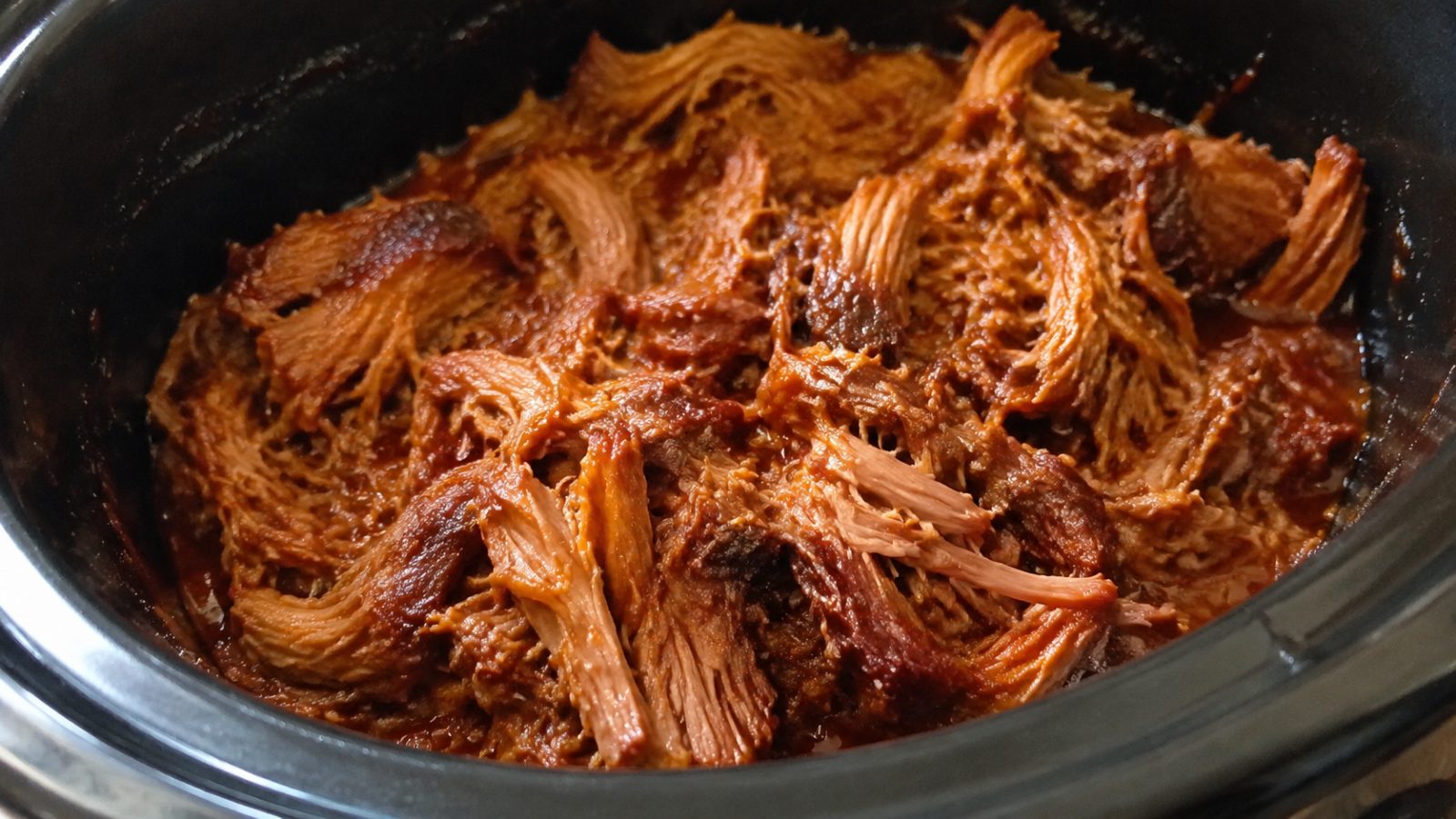
Pulled pork has a reputation for being a weekend project that demands a smoker, a patient pitmaster, and a whole day of babysitting. The truth is much friendlier. With a slow cooker, a good cut of meat, and a handful of pantry staples, you can walk away from the kitchen and come back to tender, juicy, deeply flavored pork that falls apart at the touch of a fork. This guide shows you how to make slow cooker pulled pork from start to finish, with tips on choosing the right cut, building flavor, and serving leftovers so nothing goes to waste.
Key Takeaways
- Pork shoulder (also called Boston butt) is the best cut because its fat and connective tissue melt into tender, juicy meat.
- A dry rub applied the night before and a quick sear add far more flavor than tossing everything in raw.
- Cook on low for 8 to 10 hours or on high for 5 to 6 hours until the meat shreds easily.
- Return the shredded pork to the cooking juices so it stays moist and absorbs extra flavor.
- Leftovers freeze beautifully and work in tacos, sandwiches, nachos, and more.
Why the Slow Cooker Works So Well
Pulled pork comes from a tough, hard-working muscle. The shoulder is full of collagen, a connective tissue that makes the meat chewy if cooked quickly. Over many hours of gentle, moist heat, that collagen breaks down into gelatin, which gives the pork its silky, rich texture. A slow cooker is almost purpose-built for this job. It holds a steady low temperature, traps moisture under the lid, and needs no attention while it works.
Another benefit is consistency. Ovens fluctuate, grills flare up, and smokers demand constant fuel and monitoring. A slow cooker simply keeps going. You can set it before work, start it before bed, or load it up on a lazy Sunday morning and have dinner ready with almost no effort.
Choosing the Right Cut of Pork
The cut you buy matters more than any other decision. Look for a bone-in or boneless pork shoulder, labeled either pork butt or Boston butt. Despite the name, this cut comes from the upper part of the front leg and is not the rear of the animal.
Bone-in versus boneless: Bone-in shoulder tends to deliver slightly more flavor and moisture, and the bone slides out cleanly when the meat is done. Boneless is easier to trim and fits more neatly into a slow cooker. Both work well, so choose whichever is available and fits your budget.
Size: A 3 to 4 pound roast suits most 6-quart slow cookers and feeds six to eight people. If you have a larger crowd, cut a bigger roast into two or three chunks so heat reaches the center evenly.
Fat: Look for a nice layer of fat on top with some marbling inside. You can trim off very thick pieces of surface fat, but leave a thin layer in place. It bastes the meat as it cooks.
Avoid lean cuts such as pork loin or tenderloin. They dry out and turn stringy during long cooking, and they simply do not have the collagen needed for that classic pulled texture.
Ingredients You Will Need
This recipe keeps the ingredient list simple, and most of it probably lives in your pantry already.
For the pork:
- 3 to 4 pounds pork shoulder
- 1 tablespoon olive oil or neutral oil for searing
- 1 large yellow onion, sliced
- 4 to 5 garlic cloves, smashed
- 1 cup chicken broth, apple juice, or a mix of both
- 2 tablespoons apple cider vinegar
For the dry rub:
- 2 tablespoons brown sugar
- 1 tablespoon smoked paprika
- 2 teaspoons kosher salt
- 2 teaspoons garlic powder
- 2 teaspoons onion powder
- 1 teaspoon black pepper
- 1 teaspoon ground cumin
- 1/2 teaspoon cayenne pepper (optional, for gentle heat)
- 1/2 teaspoon dried oregano
For finishing:
- 1 to 1 1/2 cups barbecue sauce, plus extra for serving
- A splash of the reserved cooking liquid
Step-by-Step Instructions
Step 1: Prepare and Season the Pork
Pat the pork dry with paper towels. A dry surface helps the rub stick and encourages browning later. Trim any extremely thick sections of fat, but do not remove all of it. Mix the rub ingredients in a small bowl, then massage the mixture over every side of the roast, pressing it into the meat.
For the best flavor, wrap the seasoned pork tightly and refrigerate it for at least 4 hours, or overnight. This gives the salt time to penetrate the meat, which seasons it all the way through rather than just on the surface.
Step 2: Sear for Extra Flavor
This step is optional, but it is worth the extra ten minutes. Heat the oil in a large skillet over medium-high heat. Sear the pork for 3 to 4 minutes per side until a deep brown crust forms. Browning creates complex, roasted flavors that you cannot get from slow cooking alone.
If you are short on time or want to keep the cleanup minimal, you can skip the sear and still end up with delicious results.
Step 3: Build the Base
Scatter the sliced onion and smashed garlic across the bottom of the slow cooker. They act as a flavorful bed that lifts the pork out of the liquid and sweetens the juices as they cook. Pour in the broth and vinegar around the edges, being careful not to wash the rub off the meat. Place the pork on top, fat side up.
The amount of liquid is important. Pork releases a lot of its own juices, so you only need about a cup. Too much liquid dilutes the flavor and gives you boiled-tasting meat instead of rich, concentrated pork.
Step 4: Cook Low and Slow
Cover and cook on low for 8 to 10 hours, or on high for 5 to 6 hours. Low is the better choice when you have the time, since the longer, gentler cook produces a more tender result. Resist the urge to lift the lid. Each peek releases heat and adds 15 to 20 minutes to the cooking time.
The pork is ready when it offers no resistance. A fork should twist easily into the meat, and the bone, if present, should pull out clean. If it still feels tight or springy, give it another hour and check again.
Step 5: Shred and Season
Transfer the pork to a large bowl or cutting board and let it rest for 10 minutes. Use two forks to pull the meat into shreds, discarding the bone and any large pieces of unrendered fat. Strain the cooking liquid into a measuring cup and skim off the fat that rises to the top.
Return the shredded pork to the slow cooker. Add a half cup of the strained juices and about a cup of barbecue sauce. Stir gently, cover, and let it heat together on low for 20 to 30 minutes so the meat absorbs all that flavor.
Tips for the Juiciest Results
Do not overcook. There is a point where pulled pork goes from tender to mushy. Check it near the lower end of the time range, especially if your slow cooker runs hot.
Season generously. Pork shoulder is a big, dense cut, and it can handle more salt and spice than you might expect. Taste the shredded meat before adding sauce and adjust if needed.
Use the juices. Those cooking liquids are pure flavor. Always moisten the shredded meat with some of them rather than relying on sauce alone.
Add acid at the end. A small splash of apple cider vinegar or a squeeze of lemon right before serving brightens the richness and makes the whole dish taste fresher.
Crisp the edges. For restaurant-style texture, spread the shredded pork on a baking sheet, brush with a little sauce, and broil for 3 to 5 minutes until the edges caramelize.
Flavor Variations to Try
Once you have the basic method down, it is easy to change the flavor profile.
Carolina style: Skip the thick barbecue sauce and finish with a tangy mixture of apple cider vinegar, a little brown sugar, red pepper flakes, and black pepper. Serve with coleslaw on a soft bun.
Mexican-inspired: Replace the rub with chili powder, cumin, and oregano, and add orange juice and lime juice to the cooker. Pile it into tortillas with pickled red onions, cilantro, and avocado.
Asian-style: Use soy sauce, hoisin, ginger, garlic, and a touch of five-spice in place of the barbecue flavors. Serve over rice with sliced cucumbers and scallions.
Cola or root beer: A can of cola or root beer in place of broth adds a subtle sweetness and helps tenderize the meat. It is a classic shortcut that works surprisingly well.
Spicy chipotle: Blend a few chipotle peppers in adobo into your sauce for a smoky, fiery kick that pairs well with sweet barbecue flavors.
Best Ways to Serve It
Pulled pork is one of the most versatile foods you can cook. Here are a few favorite ways to put it on the table.
- Classic sandwiches: Pile it onto toasted brioche or potato buns with coleslaw and pickles.
- Tacos and quesadillas: Warm tortillas, a little cheese, and a spoonful of pork make a fast weeknight meal.
- Loaded baked potatoes: Top a fluffy potato with pork, cheddar, sour cream, and chives.
- Nachos: Layer chips with pork, melted cheese, jalapenos, and a drizzle of sauce.
- Rice bowls: Serve over rice with black beans, corn, and fresh vegetables.
- Pizza topping: Spread over a crust with barbecue sauce, red onion, and mozzarella.
- Mac and cheese topper: Spoon it over creamy macaroni for the ultimate comfort meal.
For side dishes, think about contrast. Creamy coleslaw, tangy pickles, cornbread, baked beans, grilled corn, and a crisp green salad all balance the richness of the pork nicely.
Storing, Freezing, and Reheating
Leftovers are one of the best parts of making a big batch. Let the pork cool slightly, then transfer it to airtight containers along with some of its cooking juices. It keeps in the refrigerator for up to four days.
For longer storage, freeze it in portions. Use freezer bags, press out the air, and lay them flat so they freeze quickly and stack neatly. Properly stored, the pork stays good for up to three months. Thaw overnight in the refrigerator before reheating.
To reheat, warm the pork gently in a skillet or saucepan over medium-low heat with a splash of broth, water, or leftover juices. You can also use the microwave, covering the dish and stirring every 30 seconds. The extra liquid prevents the meat from drying out. Avoid blasting it on high heat, which can make the shreds tough.
Common Mistakes to Avoid
Using too much liquid. Drowning the pork leads to bland, watery meat. A cup of liquid is plenty.
Choosing a lean cut. Without enough fat and collagen, the pork will turn out dry no matter how long it cooks.
Opening the lid too often. Heat escapes quickly, and the cooking time stretches longer each time.
Skipping the rest. Shredding the meat straight away lets juices run out. A short rest keeps the pork moist.
Saucing too early. Sugary sauces can scorch or turn bitter over many hours. Add barbecue sauce at the end instead.
Overcrowding the cooker. If the roast is too large, heat may not circulate evenly. Cut it into smaller pieces if needed.
Frequently Asked Questions
Can I cook frozen pork shoulder in the slow cooker?
It is not recommended. A frozen roast spends too long in the temperature range where bacteria multiply, which raises food safety concerns. Thaw the pork fully in the refrigerator first, which usually takes a day or two for a large roast.
How do I know when pulled pork is done?
Texture matters more than time. The meat should shred easily with a fork and feel completely tender. For a more technical check, the internal temperature should reach about 195 to 205 degrees Fahrenheit, which is when the collagen has fully broken down.
Do I need to add liquid to the slow cooker?
A small amount helps prevent scorching and creates steam, but you do not need much. About one cup is enough, since the pork will release plenty of its own juices as it cooks.
Can I make pulled pork without barbecue sauce?
Absolutely. The rub and cooking juices give the meat plenty of flavor on their own. You can serve it plain, toss it with a vinegar-based sauce, or let everyone add their own sauce at the table.
Why is my pulled pork dry?
Dry pork usually means the cut was too lean, the meat was overcooked, or the shreds were not returned to the juices. Use shoulder, check for tenderness near the early end of the cooking window, and always moisten the shredded meat before serving.
Can I cook it on high instead of low?
Yes, high heat works when you are short on time and cuts the cooking to 5 or 6 hours. Low heat generally gives more tender, evenly cooked results, so choose it whenever your schedule allows.
Great pulled pork does not require special equipment or professional skills, only a good cut of meat, a flavorful rub, and enough time for the heat to do its quiet work. Season it well, cook it gently, keep it moist, and you will have a pot of tender, flavorful meat that stretches across several meals. Whether you pile it on buns for a family dinner, tuck it into tacos for a weeknight shortcut, or freeze portions for busy days ahead, this slow cooker pulled pork recipe earns its place in your regular rotation.