
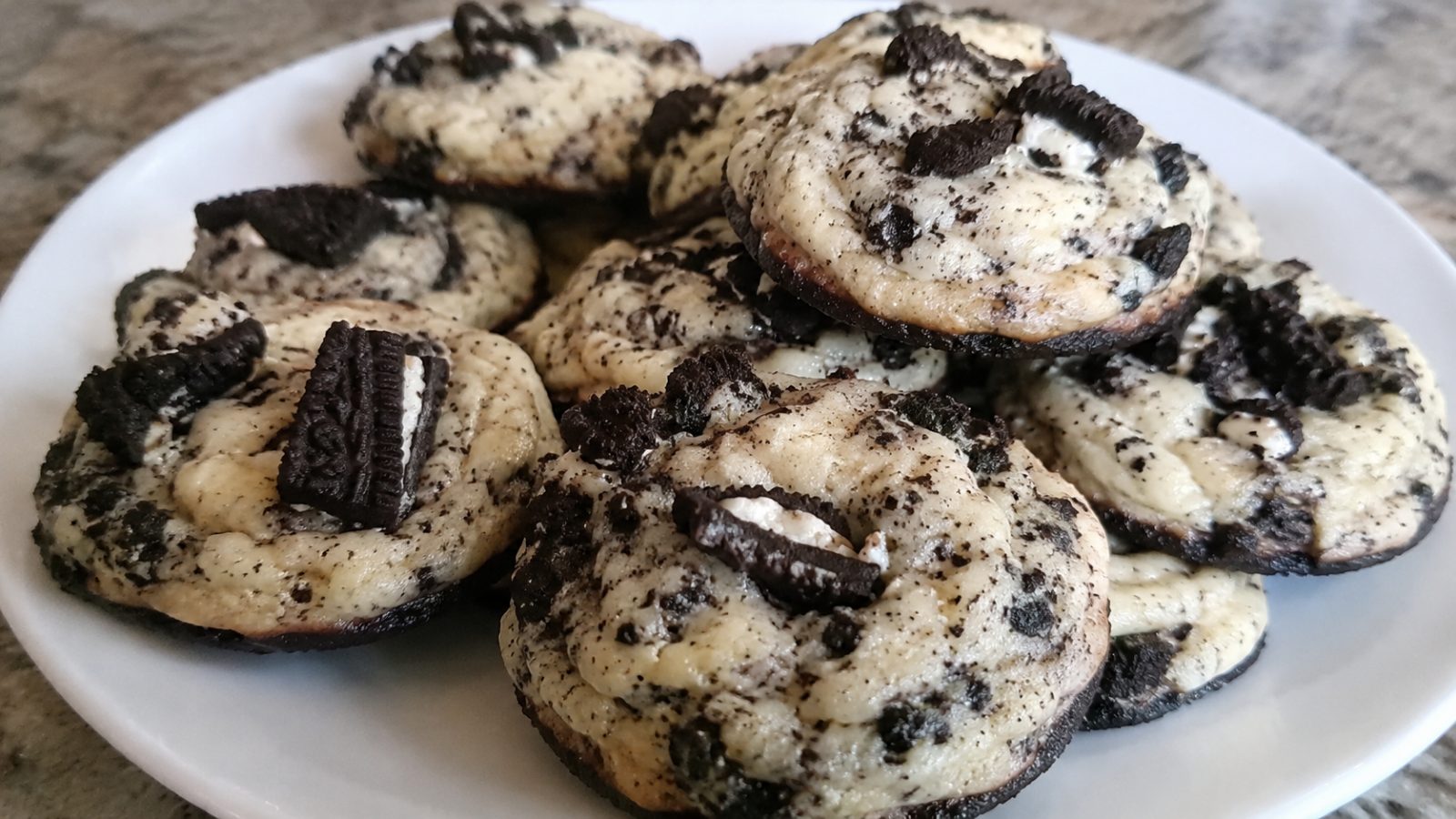
If you have ever wished you could bite into a slice of cheesecake without grabbing a fork, this recipe is for you. Oreo Cheesecake Cookies combine a thick, chewy cookie base with a tangy cream cheese flavor and generous chunks of chocolate sandwich cookies. The result tastes like a classic dessert from your favorite bakery, but it fits in the palm of your hand. They are simple to mix, forgiving for beginners, and impressive enough to bring to any party.
Key Takeaways
- The cream cheese in the dough gives these cookies a soft, tangy, cheesecake-style texture that stays tender for days.
- Chilling the dough for at least one hour prevents spreading and creates thick, bakery-style cookies.
- Crushing the sandwich cookies into a mix of fine crumbs and larger chunks gives you both flavor and crunch.
- The recipe makes about 18 large cookies and takes roughly 45 minutes of active time, plus chilling.
- Leftovers keep well at room temperature, in the fridge, or in the freezer, so they are ideal for batch baking.
Why You Will Love These Cookies
Some desserts demand hours in the kitchen, a water bath, and a lot of patience. Cheesecake is famous for that. These cookies deliver the same creamy, slightly tangy satisfaction with a fraction of the effort. There is no springform pan, no cracked surface to worry about, and no overnight chill before you can taste your work.
The texture is where this recipe really shines. Cream cheese replaces part of the butter you would normally use, which adds moisture and a subtle richness. The cookies bake up soft in the center with lightly golden edges. Every bite is studded with chocolate cookie pieces that contrast beautifully with the creamy dough.
They also work for nearly every occasion. Serve them at birthday parties, pack them in lunchboxes, set them out at a holiday cookie swap, or keep a stash in the freezer for late-night cravings. Kids love the familiar cookies-and-cream flavor, and adults appreciate the balance of sweet and tangy.
Another advantage is flexibility. You can swap in different cookie flavors, add white chocolate chips, or drizzle melted chocolate on top. Once you master the base dough, you can customize it endlessly.
Ingredients You Need
Gathering everything before you start makes the process smooth and stress free. Here is what you will need for about 18 large cookies.
For the cookie dough:
- 1/2 cup (113 g) unsalted butter, softened
- 4 ounces (113 g) full-fat cream cheese, softened
- 3/4 cup (150 g) granulated sugar
- 1/4 cup (50 g) light brown sugar, packed
- 1 large egg, at room temperature
- 2 teaspoons pure vanilla extract
- 2 cups (250 g) all-purpose flour
- 1 teaspoon cornstarch
- 1/2 teaspoon baking soda
- 1/2 teaspoon baking powder
- 1/2 teaspoon fine salt
- 15 Oreo cookies, roughly chopped
- 3/4 cup (130 g) white chocolate chips
For topping (optional):
- 6 additional Oreo cookies, crushed into coarse crumbs
- 1/2 cup white chocolate melted for drizzling
A Few Notes on the Ingredients
Use full-fat block cream cheese, not the spreadable kind sold in tubs. Spreadable versions contain more water and can make the dough sticky and hard to handle. Let the cream cheese and butter soften on the counter for about 45 minutes so they blend into a smooth, lump-free mixture.
Cornstarch is a small but important addition. It makes the cookies extra tender and helps them hold their thick shape in the oven. If you do not have any, you can leave it out, but the texture will be slightly less soft.
Room temperature eggs blend more evenly into the dough than cold ones. If you forget to set yours out, place the egg in a bowl of warm water for five minutes.
Equipment You Will Need
You do not need anything fancy for this recipe. A handheld or stand mixer makes creaming the butter and cream cheese much easier, though a sturdy spatula and some arm strength will work in a pinch. Beyond that, gather the following:
- Two large mixing bowls
- A rubber spatula
- Measuring cups and spoons, or a kitchen scale
- A large zip-top bag and rolling pin for crushing the cookies
- Two baking sheets
- Parchment paper or silicone baking mats
- A medium cookie scoop (about 3 tablespoons)
- A wire cooling rack
A kitchen scale is the most accurate way to measure flour, and it makes a real difference. Too much flour leads to dry, cakey cookies, while too little causes them to spread thin. If you use measuring cups, spoon the flour into the cup and level it off instead of scooping directly from the bag.
Step-by-Step Instructions
Step 1: Prepare the Cookie Pieces
Place the 15 cookies for the dough in a zip-top bag and seal it, pressing out the air. Gently crush them with a rolling pin until you have a mix of small crumbs and pea-sized to marble-sized chunks. Do not pulverize them into dust. The larger pieces give you the satisfying crunch and visible cookie bits in every bite. Set them aside.
Step 2: Cream the Butter, Cream Cheese, and Sugars
In a large bowl, beat the softened butter and cream cheese together on medium speed for about two minutes, until smooth and fluffy. Add the granulated sugar and brown sugar, then continue beating for another two to three minutes. The mixture should look pale and creamy. Scrape down the sides of the bowl as needed so everything blends evenly.
Step 3: Add the Egg and Vanilla
Add the egg and vanilla extract, then mix on low speed until just combined. Overbeating at this stage adds too much air, which can cause the cookies to puff up and then collapse. Mix only until you no longer see streaks of egg.
Step 4: Combine the Dry Ingredients
In a separate bowl, whisk together the flour, cornstarch, baking soda, baking powder, and salt. Whisking breaks up any lumps and distributes the leavening agents evenly, which means more consistent cookies from edge to edge.
Step 5: Mix the Dough
Add the dry mixture to the wet mixture in two or three additions, mixing on low speed. Stop as soon as the flour disappears. The dough will be soft and slightly sticky. Overmixing develops gluten, which makes cookies tough instead of tender.
Step 6: Fold in the Mix-Ins
Use a spatula to gently fold in the crushed cookies and white chocolate chips. Distribute them evenly without crushing the pieces further. The dough should look speckled with dark chunks and creamy white chips.
Step 7: Chill the Dough
Cover the bowl with plastic wrap and refrigerate for at least one hour, or up to 48 hours. This step is not optional. Cream cheese dough is softer than traditional cookie dough, and without chilling, the cookies will spread into thin, greasy discs. Cold dough bakes into thick, chewy cookies with soft centers.
Step 8: Scoop and Bake
Preheat your oven to 350°F (175°C) and line two baking sheets with parchment paper. Scoop the chilled dough into balls about 3 tablespoons each and place them two inches apart. Press a pinch of the reserved crushed cookies onto the top of each ball for a polished look.
Bake for 11 to 13 minutes, until the edges are set and lightly golden while the centers still look slightly underdone. They will continue cooking on the hot pan after you remove them.
Step 9: Cool and Finish
Let the cookies rest on the baking sheet for five minutes, then transfer them to a wire rack. Once they have cooled completely, drizzle with melted white chocolate if you like. Let the drizzle set for about 15 minutes before serving or storing.
Tips for Perfect Cheesecake Cookies
Even simple recipes benefit from a few insider tricks. These tips will help you get consistent results every time you bake.
Measure carefully. Baking is chemistry. A small excess of flour can turn a soft cookie into a dry one. Weigh your ingredients when possible.
Do not skip the chill time. If you are short on time, scoop the dough into balls first, then freeze them on a tray for 20 to 30 minutes. This speeds up the process while still protecting the shape.
Rotate your pans. Ovens often have hot spots. Halfway through baking, rotate the pans from front to back and swap the top and bottom racks for even browning.
Bake one tray at a time if possible. Cookies on the center rack bake most evenly. If you use two trays at once, expect to adjust the time by a minute or two.
Slightly underbake. The biggest mistake with soft cookies is leaving them in the oven too long. Pull them out when the centers still look a little soft. Residual heat finishes the job.
Tap the pan for ripples. For a bakery-style look, lift the baking sheet a few inches and drop it flat on the counter right when the cookies come out. This gently deflates the centers and creates attractive ridges.
Use cold cookies for the topping. Pressing room temperature crumbs onto cold dough helps them stick and prevents them from sinking in during baking.
Flavor Variations to Try
Once you are comfortable with the base recipe, experiment with these easy twists.
Double chocolate version. Replace 1/4 cup of the flour with unsweetened cocoa powder and swap the white chocolate chips for semi-sweet chips. The result is a rich, brownie-like cookie with a hint of tang.
Strawberry swirl. Fold a few tablespoons of thick strawberry jam into the dough very gently, leaving visible streaks. This mimics strawberry cheesecake and adds a bright, fruity contrast.
Mint cookie edition. Use mint-flavored sandwich cookies and add a quarter teaspoon of peppermint extract. Top with chopped dark chocolate for a festive holiday treat.
Peanut butter twist. Use peanut butter flavored sandwich cookies and stir in 1/4 cup of peanut butter chips. This version is perfect for anyone who loves salty-sweet combinations.
Stuffed cookies. Flatten a scoop of dough, place half a cookie in the center, and wrap the dough around it. Bake as directed, adding one extra minute.
How to Store and Freeze
Proper storage keeps these cookies soft and flavorful. Because the dough contains cream cheese, it is best to follow these guidelines.
Room temperature. Store the cooled cookies in an airtight container for up to two days. Place a sheet of parchment between layers to protect the drizzle.
Refrigerator. For longer freshness, keep them in the fridge for up to five days. Let them sit at room temperature for 10 to 15 minutes before eating so the texture softens again.
Freezing baked cookies. Place completely cooled cookies in a freezer-safe bag or container, separated by parchment. They will keep for up to three months. Thaw on the counter for about an hour.
Freezing dough. Scoop the dough into balls and freeze them on a tray until solid. Transfer to a freezer bag and store for up to three months. Bake straight from frozen, adding two to three minutes to the baking time. This is a wonderful way to have fresh cookies on demand.
Common Mistakes to Avoid
Even experienced bakers run into trouble now and then. Watch out for these frequent pitfalls.
Using cold cream cheese. Cold cream cheese leaves small lumps in the dough that never fully blend. Always soften it first.
Overmixing after adding flour. This creates a dense, tough texture. Stop mixing the moment the flour disappears.
Skipping parchment paper. The dough is slightly sticky, and the sugar can cause cookies to stick to bare pans. Parchment makes cleanup effortless.
Crowding the pan. Cookies need room to expand. Placing them too close together causes them to merge and bake unevenly.
Baking until fully set in the center. If the center looks completely dry when you pull them out, they will be overbaked once cooled. Trust the process and look for soft middles.
Serving Ideas
These cookies are delicious on their own, but a few pairings turn them into a showstopper. Serve them warm with a scoop of vanilla ice cream for a quick cookie sundae. Sandwich a spoonful of whipped cream or cream cheese frosting between two cookies for an indulgent treat. They also pair beautifully with a cold glass of milk, a hot cup of coffee, or a latte.
For gifting, stack four or five cookies in a clear cellophane bag tied with a ribbon. Add a handwritten tag with storage instructions, and you have a thoughtful homemade present that looks far more complicated than it was to make.
Frequently Asked Questions
Can I make the dough ahead of time?
Yes. The dough keeps in the refrigerator for up to 48 hours or in the freezer for up to three months. Resting the dough overnight actually deepens the flavor and improves the texture.
Why did my cookies spread too much?
The most common causes are warm dough, butter that was too soft, or too little flour. Make sure the dough is thoroughly chilled and measure your flour accurately. Baking on a cool pan also helps.
Do I need to remove the cream filling from the sandwich cookies?
No, you can use the whole cookie, filling included. The filling melts slightly into the dough and adds extra sweetness and creaminess. If you prefer a less sweet cookie, scrape out the filling before crushing.
Can I use low-fat cream cheese?
It is not recommended. Low-fat and fat-free versions contain more moisture and fewer solids, which can change the texture and make the dough too soft. Full-fat block cream cheese gives the best results.
How do I know when the cookies are done?
Look for set, lightly golden edges and centers that still appear soft and slightly puffy. They will firm up as they cool on the pan. Overbaking leads to dry, crumbly cookies.
Can I make these gluten-free?
You can substitute a cup-for-cup gluten-free flour blend and use gluten-free chocolate sandwich cookies. Expect a slightly different texture, and chill the dough a bit longer to help it hold together.
These cookies prove that you do not need a complicated dessert to deliver big flavor. With a soft, tangy base, crunchy chocolate pieces, and a creamy finish, every batch disappears quickly. Follow the chilling step, watch your bake time, and customize the mix-ins to suit your taste. Whether you are baking for a crowd or treating yourself, Oreo Cheesecake Cookies are a dependable recipe worth adding to your permanent dessert rotation.