
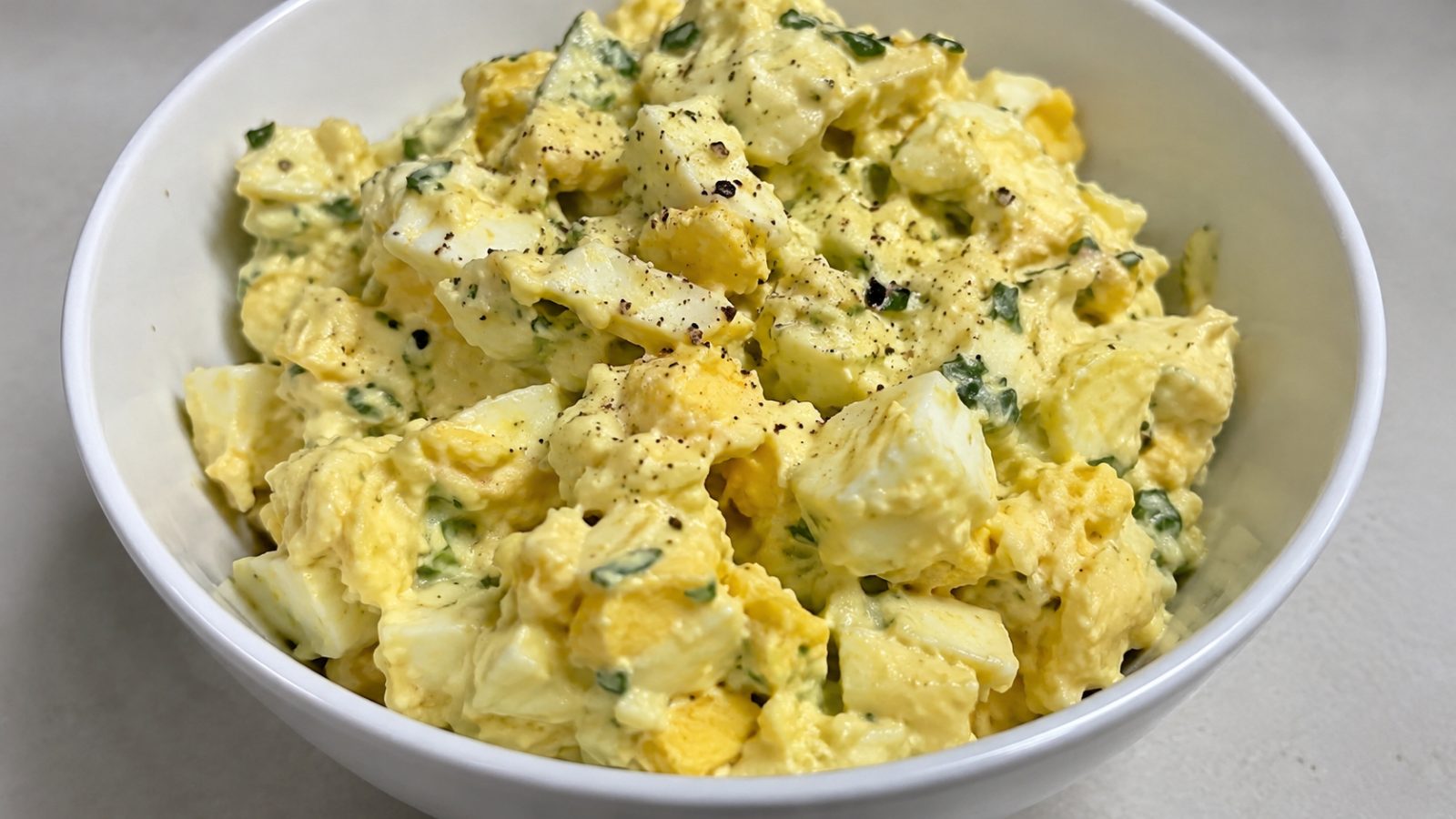
Egg salad looks simple, yet it is one of the easiest dishes to get wrong. Too much mayonnaise turns it greasy, too little leaves it dry, and a bland dressing makes even perfectly cooked eggs taste flat. This guide gives you a reliable method for a bright, creamy, well-seasoned salad that works on toast, in a sandwich, or straight from the bowl. You will learn how to cook the eggs, build a balanced dressing, adjust the texture, and store leftovers safely.
Key Takeaways
- Perfectly cooked eggs with firm whites and creamy yolks are the foundation of great egg salad.
- A balanced dressing needs fat, acid, a little heat, and a touch of sweetness.
- Chilling the salad for 30 minutes lets the flavors blend and improves the texture.
- Simple add-ins like celery, chives, and paprika add crunch and color without overpowering the eggs.
- Egg salad keeps safely in the refrigerator for up to four days when stored in a sealed container.
Why the Dressing Makes or Breaks Egg Salad
Eggs have a mild, rich flavor. On their own, they need help. The dressing provides moisture, tang, and seasoning, and it ties the chopped whites and crumbled yolks into a cohesive salad. A great dressing does four jobs at once.
First, it adds fat. Mayonnaise is the classic choice because it is already an emulsion of egg yolk and oil, so it blends naturally with the eggs. Second, it adds acid. A splash of vinegar or lemon juice cuts through the richness and keeps each bite lively. Third, it adds a savory edge. Dijon mustard brings gentle heat and depth. Fourth, it adds balance. A tiny pinch of sugar rounds off the sharp edges, which is the same trick used in classic deli salads.
When these four elements are in proportion, the salad tastes fresh instead of heavy. That balance is the real secret behind every memorable batch.
Ingredients You Will Need
This recipe serves four generously and takes about 20 minutes from start to finish, plus chilling time.
For the eggs:
- 8 large eggs
- Ice and cold water for the ice bath
For the dressing:
- 1/3 cup mayonnaise
- 2 tablespoons plain Greek yogurt (optional, for extra tang and a lighter feel)
- 1 tablespoon Dijon mustard
- 1 teaspoon white wine vinegar or fresh lemon juice
- 1/4 teaspoon fine sea salt, plus more to taste
- 1/4 teaspoon freshly ground black pepper
- A pinch of sugar
- 1/4 teaspoon sweet paprika
For the mix-ins:
- 1 celery stalk, finely diced
- 1 tablespoon minced fresh chives
- 1 tablespoon finely minced red onion or shallot (optional)
- 1 tablespoon chopped fresh dill or parsley (optional)
Use the freshest ingredients you can. Eggs that are a week or two old actually peel more easily than very fresh ones, so do not worry if your carton has been in the fridge for a while.
How to Boil Eggs for Egg Salad
Texture starts here. Overcooked eggs develop a chalky yolk and that unpleasant gray-green ring. Undercooked eggs turn the salad runny and make it hard to chop. The goal is a fully set yolk that is still tender and bright yellow.
Step 1: Start with cold water. Place the eggs in a single layer in a medium saucepan. Cover them with cold water by about one inch.
Step 2: Bring to a boil. Heat over high heat until the water reaches a full rolling boil.
Step 3: Turn off the heat and cover. Remove the pan from the burner, cover it with a lid, and let the eggs sit for 11 to 12 minutes. Use 10 minutes if you prefer a slightly creamier yolk.
Step 4: Shock in ice water. Transfer the eggs to a bowl of ice water and let them cool for at least 10 minutes. This stops the cooking and makes peeling much easier.
Step 5: Peel under cool water. Tap each egg gently on the counter, roll it to crack the shell all over, and peel starting from the wider end. Running cool water over the egg helps the membrane slip away.
If you prefer steaming, place the eggs in a steamer basket over simmering water, cover, and steam for 12 minutes before moving them to the ice bath. Steaming often gives very clean peeling results.
Building the Creamy Tangy Dressing
Mix the dressing in the bottom of a large bowl before adding anything else. This gives you full control over the seasoning and prevents overmixing the eggs later.
Add the mayonnaise, Greek yogurt, Dijon mustard, vinegar or lemon juice, salt, pepper, sugar, and paprika to the bowl. Whisk until completely smooth. Taste a small spoonful on its own. It should taste slightly more assertive than you want the finished salad to be, because the eggs will mellow everything once they are folded in.
Here is how to adjust the dressing to your taste:
- Too rich? Add another half teaspoon of lemon juice or a spoonful of yogurt.
- Too sharp? Add a pinch more sugar or a small spoonful of mayonnaise.
- Too flat? Add a bit more salt, which is the most common fix.
- Want more kick? Stir in a few drops of hot sauce or a pinch of cayenne.
The Greek yogurt is optional, but it is worth trying. It reduces the heaviness of the mayonnaise and adds a subtle freshness that keeps people coming back for a second spoonful.
Putting It All Together
Once the eggs are peeled and dry, it is time to chop. The way you cut the eggs changes the personality of the salad, so decide what you are going for.
For a chunky, rustic salad, use an egg slicer or a knife and cut the eggs into rough half-inch pieces. For a finer, spreadable texture, mash the eggs with a fork or pastry cutter against the side of the bowl. Some cooks like a mix: they mash the yolks into the dressing to make it extra creamy, then fold in chopped whites for structure.
Step 1: Separate two of the yolks and mash them directly into the dressing. This thickens it and adds richness without extra mayonnaise.
Step 2: Roughly chop the remaining yolks and all the whites, then add them to the bowl.
Step 3: Add the celery, chives, onion, and herbs.
Step 4: Fold gently with a rubber spatula until everything is evenly coated. Avoid stirring aggressively, which can break the eggs down into a paste.
Step 5: Taste and adjust the seasoning. Cover and refrigerate for at least 30 minutes before serving.
Sprinkle a little paprika and extra chives on top just before serving for a polished look.
Flavor Variations to Try
Once you have mastered the base, it is easy to customize. Here are some reliable twists.
Classic deli style. Add a tablespoon of sweet pickle relish and skip the herbs. The slight sweetness is nostalgic and works well in sandwiches.
Herb garden. Double the chives and dill, and add a teaspoon of fresh tarragon. This version is excellent on crackers or cucumber slices.
Spicy kick. Mix in a teaspoon of sriracha or a small spoonful of chopped pickled jalapeños. Finish with a squeeze of lime.
Avocado twist. Replace half of the mayonnaise with mashed ripe avocado. Add extra lemon juice to keep it bright and eat it the same day, since avocado browns quickly.
Bacon and chive. Fold in four slices of crumbled crispy bacon right before serving so the bacon stays crunchy.
Curry style. Add 1/2 teaspoon of mild curry powder and a handful of golden raisins. Chopped toasted almonds add a pleasant crunch.
Smoky and savory. Stir in a pinch of smoked paprika and a teaspoon of capers for a briny, deeper flavor.
Tips for the Best Texture
Texture is what separates good egg salad from forgettable egg salad. Keep these tips in mind.
Dry the eggs. After peeling, pat the eggs dry with a paper towel. Excess water thins the dressing and makes the salad watery.
Cool the eggs completely. Mixing warm eggs into mayonnaise can cause the dressing to loosen and turn oily. Always chill the eggs first.
Dice the celery very small. Large pieces can feel overwhelming. A fine dice gives crunch in every bite without dominating.
Do not overmix. Fold just until combined. Overworking breaks the whites and creates a pasty result.
Season in stages. Salt the dressing, then taste again after mixing in the eggs. Eggs absorb seasoning, so the final adjustment matters.
Let it rest. Thirty minutes in the refrigerator lets the flavors blend and the dressing set into a creamy coating.
Delicious Ways to Serve Egg Salad
This salad is wonderfully versatile. Here are some of the best ways to enjoy it.
- Classic sandwich: Pile it onto soft white bread, sourdough, or a buttery croissant with crisp lettuce.
- Open-faced toast: Spread it on toasted rye or whole grain bread and top with sliced radishes or tomatoes.
- Lettuce wraps: Spoon it into butter lettuce cups for a light, low-carb lunch.
- Stuffed avocado: Fill halved avocados with a scoop of egg salad for a protein-packed meal.
- Cracker platter: Serve in a bowl surrounded by crackers, cucumber rounds, and cherry tomatoes for a party appetizer.
- Stuffed tomatoes: Hollow out ripe tomatoes and fill them with the salad for an elegant side dish.
- Bagel topping: Layer it on a toasted bagel with sprouts and a slice of tomato for brunch.
It also makes a satisfying meal prep item. Portion it into small containers and pair it with fresh vegetables for easy lunches throughout the week.
Storage and Food Safety
Because egg salad contains cooked eggs and mayonnaise, handling it properly matters. Store it in an airtight container in the refrigerator at 40 degrees Fahrenheit (4 degrees Celsius) or below. It stays fresh for up to four days.
Do not leave egg salad at room temperature for more than two hours. If you are serving it outdoors on a warm day, keep the bowl nestled in a larger bowl of ice. If the temperature is above 90 degrees Fahrenheit, the safe window shrinks to one hour.
Freezing is not recommended. The whites become rubbery and the dressing separates when thawed, leaving you with a watery, grainy mess. Instead, make smaller batches more often, since the salad takes so little time to prepare.
If the salad develops an off smell, a slimy texture, or any discoloration, discard it right away.
Common Mistakes to Avoid
Even a simple dish has a few traps. Watch out for these.
Boiling the eggs too long. Aggressive boiling for 15 minutes or more leads to dry, crumbly yolks. Use the covered, off-heat method for tender results.
Skipping the ice bath. Without it, the eggs continue cooking and the yolks turn green at the edges.
Adding too much mayonnaise at once. Start with less and add more as needed. You can always add, but you cannot take away.
Forgetting acid. Without vinegar or lemon juice, the salad tastes heavy and one-note.
Under-seasoning. Egg salad needs more salt than most people expect. Taste before serving.
Serving it straight away. The flavors improve after resting, so give it time in the fridge.
Frequently Asked Questions
How many eggs do I need for four servings of egg salad?
Eight large eggs make about four generous sandwich portions, or roughly three cups of salad. Scale the recipe up or down by keeping the ratio of two eggs per serving.
Can I make egg salad without mayonnaise?
Yes. Replace the mayonnaise with plain Greek yogurt, mashed avocado, or a mix of olive oil and extra Dijon mustard. Add a little more salt and lemon juice to keep the flavor lively.
How long can egg salad sit out at a party?
No longer than two hours at room temperature, or one hour if it is hotter than 90 degrees Fahrenheit. Keep it on ice for longer events to stay safe.
Why is my egg salad watery?
Usually the eggs were not dried after peeling, or they were mixed in while still warm. Pat them dry, chill them fully, and drain any watery add-ins like pickles before folding them in.
Can I make egg salad ahead of time?
Absolutely. It tastes even better after resting for a few hours. Prepare it up to a day in advance, store it covered in the fridge, and give it a gentle stir before serving.
Great egg salad comes down to a few thoughtful choices: gently cooked eggs, a balanced dressing, and a short rest in the refrigerator. Once you understand how fat, acid, and seasoning work together, you can adapt the salad to any taste, from classic deli style to herb-packed or spicy. Keep the ingredients simple, taste as you go, and do not rush the chilling time. With this approach, you now have a dependable egg salad recipe with the best dressing that you can make on busy weekdays, serve at gatherings, and enjoy for lunch all week long.