
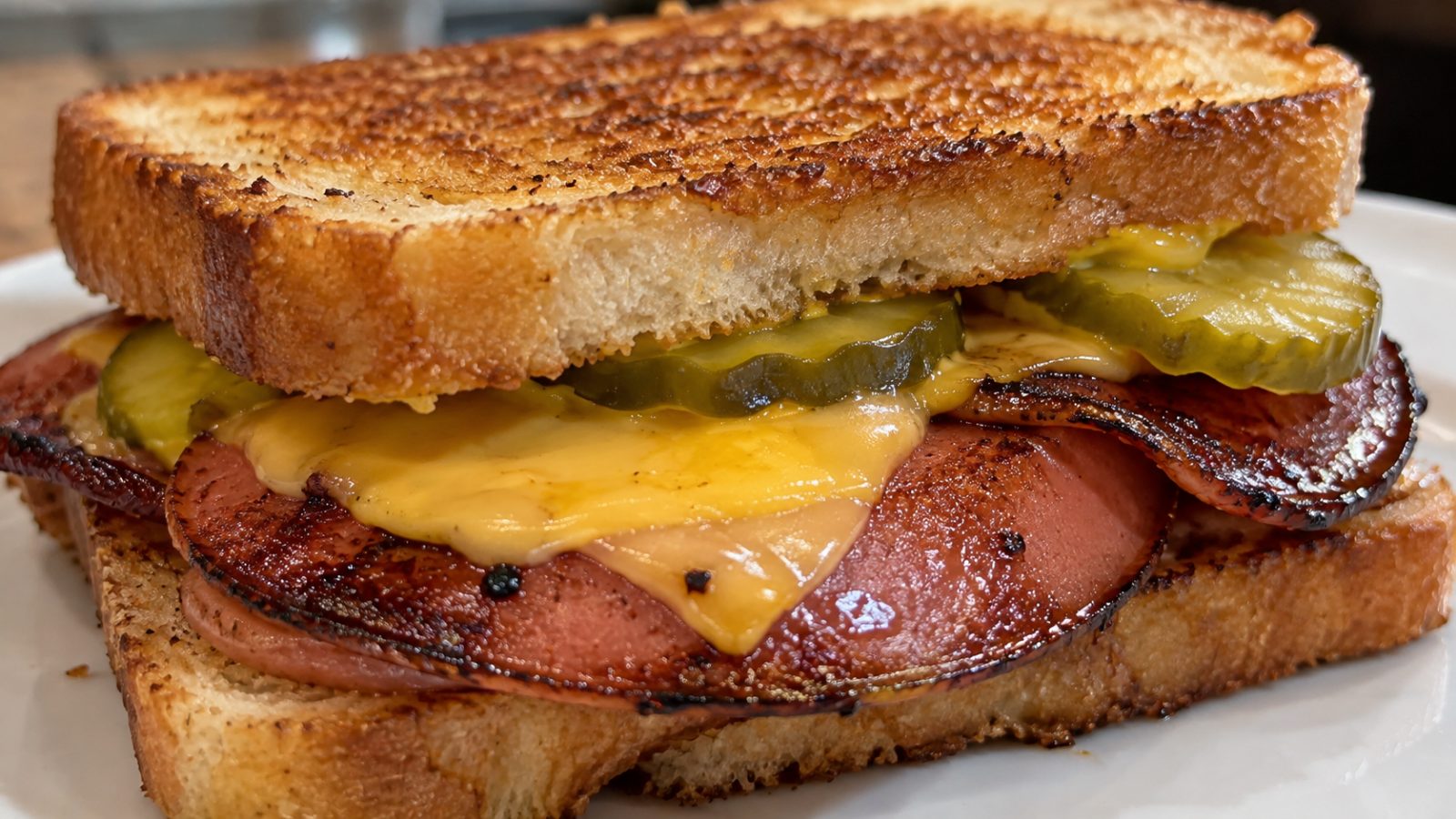
A Fried Bologna Sandwich combines crispy, golden-brown bologna, melted cheese, and toasted bread for a satisfying comfort-food classic. This easy skillet recipe delivers smoky, savory flavor, buttery bread, and perfectly caramelized edges in just 15 minutes.
Ingredients
The secret to an excellent sandwich lies in choosing thick-cut bologna, using the right cooking temperature, and balancing the richness of the meat with sharp, tangy condiments. Fresh bread and good-quality cheese make a noticeable difference.
Recipe details:
-
Preparation time: 5 minutes
-
Cooking time: 10 minutes
-
Total time: 15 minutes
-
Servings: 2 sandwiches
-
Cooking method: Stovetop
-
Difficulty: Easy
For the Sandwiches
-
4 slices thick-cut bologna, approximately ¼ inch thick
-
4 slices white sandwich bread, Texas toast, or brioche
-
2 slices American cheese or sharp cheddar cheese
-
1 tablespoon unsalted butter
-
1 teaspoon neutral cooking oil
-
2 tablespoons mayonnaise
-
2 teaspoons yellow mustard or Dijon mustard
-
4 dill pickle slices
-
2 thin tomato slices (optional)
-
2 leaves crisp iceberg lettuce (optional)
-
Freshly ground black pepper, to taste
Optional Flavor Additions
-
½ teaspoon smoked paprika
-
½ teaspoon hot sauce
-
2 tablespoons thinly sliced caramelized onions
-
2 slices cooked bacon
-
1 teaspoon honey mustard
-
2 fried eggs for a breakfast variation
Chef’s tip: Ask your deli to slice the bologna approximately ¼ inch thick. Thick slices develop a flavorful crust while retaining a tender, juicy center. Thin packaged bologna also works, but it cooks much faster and curls more easily.
American cheese produces the smoothest melt, while sharp cheddar contributes a stronger, slightly tangy flavor. Choose according to your preference.
How to Make Fried Bologna Sandwich
Step 1: Prepare the Bologna and Sandwich Ingredients
Begin by removing the bologna from the refrigerator approximately five minutes before cooking. Pat each slice dry with a paper towel to remove excess surface moisture.
Using a sharp knife, make four small cuts around the outer edge of each bologna slice, approximately ½ inch deep.
These cuts prevent the edges from curling excessively as the meat heats. Bologna naturally contracts during frying, and without small cuts, the center may rise away from the skillet.
Prepare the remaining sandwich ingredients before turning on the heat.
Spread mayonnaise across two bread slices and mustard across the remaining two. Set aside the cheese, pickles, and any additional toppings.
If using tomatoes, slice them thinly and pat them dry. Excess moisture can make the toasted bread soggy.
For a spicy variation, combine the mayonnaise with a few drops of hot sauce and a pinch of smoked paprika.
Chef’s tip: Avoid seasoning bologna with additional salt. Most varieties already contain enough sodium, and extra salt can overwhelm the finished sandwich.
Step 2: Fry the Bologna Until Golden and Crispy
Place a heavy-bottomed skillet or cast-iron frying pan over medium heat.
Add the neutral cooking oil and allow it to warm until the surface begins to shimmer. The oil should be hot but never smoking.
Arrange the bologna slices in the skillet without overcrowding. Depending on the size of your pan, you may need to cook them in batches.
Allow the meat to fry undisturbed for approximately 2–3 minutes on the first side.
The surface should develop golden-brown patches, while the edges become slightly crisp. Listen for a gentle, consistent sizzling sound.
Turn the slices using kitchen tongs and cook for another 1–2 minutes.
Press lightly against any raised sections with a spatula to encourage even contact with the hot skillet.
During the final 30–45 seconds, place a slice of cheese over each pair of bologna slices. Cover the skillet briefly to encourage the cheese to melt.
Remove the bologna once both sides are browned and the cheese is soft and melted.
Transfer the cooked meat to a warm plate.
Chef’s tip: Medium heat gives you better control than high heat. Bologna contains fat and natural sugars that brown quickly. Excessive heat can burn the exterior before the center warms evenly.
For thinly sliced bologna, reduce cooking time considerably. Thin slices generally require approximately 30–60 seconds per side.
Step 3: Toast the Bread and Assemble the Sandwiches
Reduce the skillet heat to medium-low and add the unsalted butter.
Allow the butter to melt, swirling the pan until the bottom is evenly coated.
Place the bread slices in the skillet and toast for approximately 1–2 minutes per side, or until golden brown.
Work in batches if necessary.
The bread should develop a crisp, buttery exterior while remaining slightly soft inside. Avoid over-toasting because excessively hard bread can overpower the tender bologna.
Transfer the toasted bread to a clean cutting board.
Place two slices of fried bologna and one melted cheese slice onto each sandwich, adjusting the meat as necessary to fit the bread.
Add dill pickles for acidity and crunch. If desired, include sliced tomatoes, lettuce, caramelized onions, or cooked bacon.
Finish with the remaining bread slices, keeping the condiment-coated sides facing inward.
Press the sandwiches together gently.
For a more cohesive sandwich, return each assembled sandwich to the warm skillet for approximately 30 seconds per side. Press lightly with a spatula to help the cheese bind the ingredients.
Transfer to a serving plate and cut diagonally using a sharp serrated knife.
Serve immediately while the bread remains crisp and the cheese is warm.
Chef’s tip: The best Fried Bologna Sandwich depends on controlling the contrast between textures. Crispy meat edges, melted cheese, tangy pickles, and buttery toasted bread should remain distinct rather than becoming greasy or soggy.
What to Serve With Fried Bologna Sandwich
The rich, savory flavor of fried bologna works particularly well with crisp, tangy, or refreshing side dishes.
1. Crispy French Fries
Golden French fries are a classic accompaniment. Season them with salt, black pepper, or smoked paprika and serve with ketchup or mustard.
For additional flavor, prepare seasoned potato wedges or thin shoestring fries.
2. Dill Pickles
Cold, crunchy dill pickles cut through the richness of the fried meat and melted cheese.
Choose refrigerated pickles for a particularly crisp texture. Pickled jalapeños are another excellent option if you enjoy spicy food.
3. Creamy Coleslaw
Traditional coleslaw provides a refreshing contrast through its crunchy cabbage and slightly tangy dressing.
A vinegar-based coleslaw is especially suitable because its acidity balances the sandwich without adding excessive richness.
4. Potato Chips
Classic salted potato chips make a convenient accompaniment, especially for a quick lunch.
Barbecue, salt-and-vinegar, and sour cream potato chips also complement the smoky, salty meat.
5. Tomato Soup
Serve the sandwich alongside a bowl of warm tomato soup for a comforting meal.
The soup’s acidity complements the cheese and bologna, while its smooth texture contrasts with the toasted bread.
6. Fresh Garden Salad
For a lighter meal, serve mixed lettuce, cucumber, cherry tomatoes, and thinly sliced red onions with a simple lemon vinaigrette.
The fresh vegetables provide additional fiber and balance the sandwich’s richness.
Fried Bologna Sandwich Nutrition Information
The nutritional values below are estimates for one sandwich made with two slices of thick-cut bologna, two slices of white bread, one slice of American cheese, mayonnaise, mustard, butter, and a small quantity of cooking oil.
Actual nutritional values vary considerably according to bologna thickness, brand, bread selection, and condiment quantities.
|
Nutrient |
Approximate Amount |
|---|---|
|
Calories |
650 kcal |
|
Protein |
23 g |
|
Total carbohydrates |
33 g |
|
Total fat |
47 g |
|
Saturated fat |
17 g |
|
Fiber |
2 g |
|
Total sugars |
5 g |
|
Sodium |
1,750 mg |
|
Cholesterol |
120 mg |
Bologna and cheese contribute protein but also contain substantial amounts of sodium and saturated fat.
For a lighter variation, use thinner bologna slices, whole-grain bread, reduced-fat cheese, and a smaller quantity of mayonnaise.
Adding lettuce, tomatoes, or other fresh vegetables contributes fiber and micronutrients without dramatically increasing calories.
Because processed meats can contain considerable sodium, enjoy this sandwich occasionally as part of a varied diet.
FAQs
1. What is the best type of bologna for frying?
Thick-cut beef bologna is an excellent choice because it develops a flavorful crust while remaining tender inside. Traditional pork-and-beef bologna also works beautifully. Choose a good-quality deli variety with a balanced smoky flavor.
2. Why does bologna curl when frying?
Bologna curls because its outer edges contract as the meat heats. Making several shallow cuts around the perimeter helps each slice remain flatter and allows more even contact with the skillet.
3. Should I fry bologna in butter or oil?
Neutral cooking oil works particularly well because it handles frying temperatures without burning as quickly as butter. Use butter separately for toasting the bread to achieve a richer flavor and golden crust.
4. What cheese goes best with fried bologna?
American cheese is a popular choice because it melts smoothly and coats the warm bologna evenly. Sharp cheddar provides a stronger flavor, while Swiss cheese offers a mild, nutty alternative. Pepper Jack works well for a spicy variation.
5. Can I make this sandwich without cheese?
Absolutely. Simply omit the cheese and increase the mustard or add extra pickles for additional flavor. A combination of mayonnaise, mustard, and crispy fried bologna produces a delicious sandwich without cheese.
6. Can I prepare fried bologna ahead of time?
Yes. Cook the bologna, allow it to cool, and refrigerate it in an airtight container for up to three days. Reheat thoroughly in a skillet before assembling the sandwich. Toast the bread immediately before serving for the best texture.
7. How do I prevent the sandwich from becoming greasy?
Use only a small amount of cooking oil, avoid excessively fatty additions, and fry the meat over controlled medium heat. Transfer the cooked bologna briefly to a paper towel if necessary. Spread condiments sparingly and avoid adding extra butter during assembly.
8. Can I make a fried bologna sandwich in an air fryer?
Yes. Arrange the scored bologna slices in a single layer in the air fryer basket. Cook at 375°F (190°C) for approximately 4–6 minutes, turning halfway through. Add cheese during the final minute if desired. Cooking times vary according to slice thickness and air fryer model, so monitor the meat carefully.