
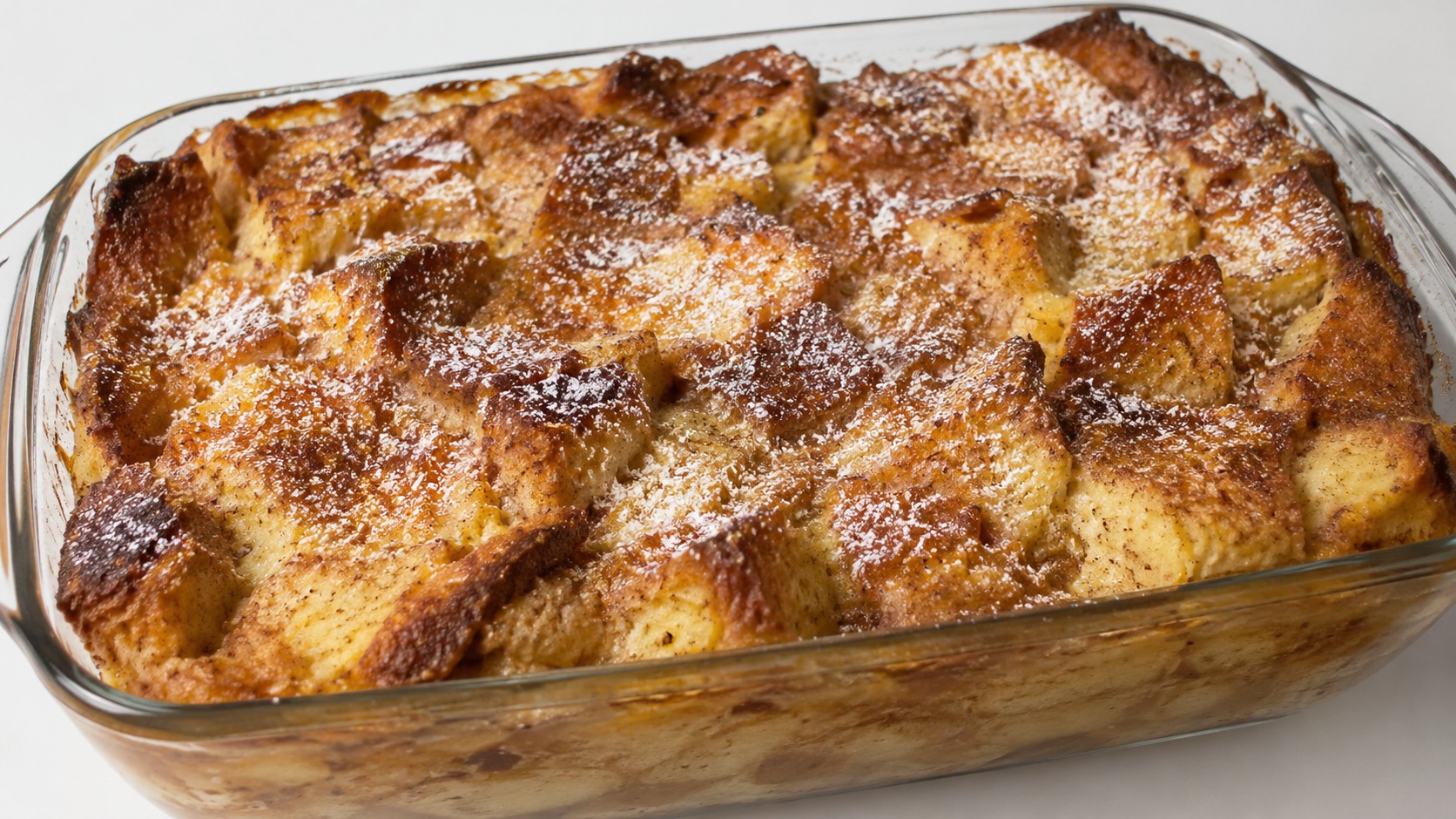
There’s something deeply comforting about a dish that smells like a grandmother’s kitchen before you even taste it. This Vintage French Toast Casserole brings back that warm, custardy, cinnamon-spiced nostalgia in one simple baked dish. Instead of standing over a skillet flipping individual slices, you layer everything in a pan the night before, let it soak overnight, and bake it in the morning. It’s the kind of recipe that feels like it’s been passed down for generations, even if you’re making it for the very first time today.
Key Takeaways
- This dish is made by soaking cubed or sliced bread in an egg custard, then baking it until golden and set.
- It can be prepared the night before, making it perfect for holidays, brunches, or busy mornings.
- Stale or day-old bread works best because it absorbs the custard without turning mushy.
- Toppings like cinnamon sugar, maple syrup, powdered sugar, or fresh fruit make it endlessly customizable.
- It reheats well, so leftovers are just as satisfying the next day.
Why This Old-Fashioned Bake Still Holds Up Today
Long before overnight oats and meal-prep breakfasts became trendy, home cooks were already solving the same problem: how to make a warm, filling breakfast without a lot of morning effort. Baked bread puddings and custard-soaked breads have roots going back centuries, born out of necessity to use up leftover bread rather than waste it. What started as a frugal solution eventually became a beloved comfort food, showing up at Sunday breakfasts, holiday tables, and potlucks for decades.
The appeal isn’t just nostalgia, though. There’s real practicality here. A casserole version of French toast means no standing at the stove, no burnt edges, and no juggling multiple pans while everyone waits impatiently at the table. You assemble it once, let the bread soak up all that eggy, vanilla-scented custard, and let the oven do the rest of the work.
What You’ll Need
The ingredient list is short and mostly pantry staples, which is part of why this recipe has stayed popular for so long.
For the casserole:
- 1 loaf of day-old bread (challah, brioche, or French bread work beautifully)
- 8 large eggs
- 2 cups whole milk
- 1 cup heavy cream
- 3/4 cup granulated sugar or brown sugar
- 2 teaspoons vanilla extract
- 1 tablespoon ground cinnamon
- 1/4 teaspoon ground nutmeg
- Pinch of salt
For the topping (optional but recommended):
- 1/2 cup cold butter, cubed
- 1/2 cup brown sugar
- 1/2 cup flour
- 1 teaspoon cinnamon
- Chopped pecans or walnuts, if desired
Using slightly stale bread is a small detail that makes a big difference. Fresh, soft bread tends to fall apart once it hits the wet custard, while bread that’s a day or two old holds its shape and soaks up flavor without turning into mush.
Step-by-Step: How to Make It
1. Prepare the bread. Cut your loaf into large cubes, roughly one to one and a half inches thick. Spread them evenly across a greased 9×13 inch baking dish. If your bread is fresh, toast the cubes lightly in the oven at a low temperature for about ten minutes to dry them out slightly.
2. Make the custard. In a large mixing bowl, whisk together the eggs, milk, heavy cream, sugar, vanilla, cinnamon, nutmeg, and salt until fully combined. The mixture should look smooth and slightly frothy.
3. Pour and soak. Pour the custard evenly over the bread cubes, making sure every piece gets coated. Gently press down with a spatula so the bread absorbs the liquid. Cover the dish with plastic wrap or foil and refrigerate for at least four hours, though overnight is ideal.
4. Add the topping. Just before baking, combine the cold butter, brown sugar, flour, and cinnamon with your fingers until it forms coarse crumbles. Sprinkle this mixture evenly over the soaked bread. Add nuts here if you’re using them.
5. Bake. Preheat your oven to 350°F. Bake uncovered for 45 to 55 minutes, or until the top is golden brown and the center is set but still slightly soft, similar to a bread pudding.
6. Rest and serve. Let the casserole sit for about 10 minutes before serving. This helps it firm up just enough to slice cleanly. Serve warm with maple syrup, a dusting of powdered sugar, or fresh berries.
Tips for the Best Results
A few small adjustments can take this dish from good to unforgettable.
- Choose the right bread. Brioche and challah give the richest, most tender texture because of their higher egg and butter content. French bread offers a slightly firmer bite if you prefer more structure.
- Don’t skip the soak time. Rushing this step is the most common mistake. The bread needs time to fully absorb the custard, or you’ll end up with dry spots and soggy spots in the same pan.
- Watch the bake time closely. Ovens vary, and pulling the dish out a few minutes early keeps the center soft rather than dry. A slight jiggle in the middle is normal and will firm up as it rests.
- Use full-fat dairy. Whole milk and heavy cream create that classic custardy richness. Lower-fat substitutes tend to make the dish thinner and less satisfying.
- Let it cool slightly before cutting. Cutting into it too soon can cause it to fall apart, especially with a softer bread like brioche.
Make-Ahead and Storage Guidance
One of the best things about this recipe is how well it fits into a make-ahead routine, especially around busy holidays like Christmas morning or Easter brunch.
To make ahead: Assemble the casserole up to the point of baking, cover tightly, and refrigerate for up to 24 hours before putting it in the oven. This is actually recommended, since the extended soak time improves the texture.
To store leftovers: Cover any leftover casserole and refrigerate for up to four days. Reheat individual portions in the microwave for 30 to 45 seconds, or warm larger portions in a 300°F oven until heated through.
To freeze: Baked and cooled casserole can be frozen in an airtight container for up to two months. Thaw overnight in the refrigerator before reheating.
Fun Variations to Try
While the classic version is hard to beat, there are plenty of ways to put your own spin on it.
- Apple cinnamon version: Fold in thinly sliced apples before baking, or layer them between the bread cubes for a fall-inspired twist.
- Banana and pecan: Add sliced bananas and a handful of chopped pecans to the topping for extra flavor and crunch.
- Berry swirl: Mix fresh or frozen berries into the custard before pouring it over the bread.
- Savory twist: Skip the sugar and cinnamon, add shredded cheese and cooked bacon or sausage, and serve it as a savory brunch bake instead.
- Pumpkin spice: Swap in pumpkin puree and pumpkin pie spice during the holiday season for a seasonal favorite.
Why It’s Perfect for Gatherings
Feeding a crowd for breakfast can be stressful, especially during holidays when the kitchen is already busy with other dishes. A baked casserole solves that problem elegantly. It can be prepped the night before, requires no last-minute flipping or attention, and bakes hands-free while you focus on coffee, setting the table, or getting the rest of the meal together.
It also scales well. Doubling the recipe in a larger pan works without any real adjustments beyond a slightly longer bake time, making it a reliable choice for holiday mornings, family reunions, or overnight guests.
Nutritional Notes
While this is undeniably a treat rather than an everyday health food, there are ways to lighten it up if needed. Swapping part of the heavy cream for additional milk reduces richness without losing too much of the custard texture. Using a reduced sugar amount in the custard, and skipping the streusel topping, can also cut down on overall sweetness while still delivering that classic flavor.
For those with dietary restrictions, gluten-free bread can be substituted, though the texture will be slightly different. Dairy-free milk alternatives like oat milk or full-fat coconut milk can also work in place of dairy, though the flavor profile will shift slightly.
Frequently Asked Questions
Can I use fresh bread instead of day-old bread? Yes, but it’s best to dry it out first. Cut the bread into cubes and bake at a low temperature for about ten minutes before assembling, so it doesn’t turn mushy once soaked.
Do I have to refrigerate it overnight? Not necessarily. A minimum of four hours in the refrigerator allows the bread to absorb the custard properly, though overnight soaking gives the best texture and flavor.
Can I make this dairy-free? Yes. Substitute the milk and cream with unsweetened oat milk or full-fat coconut milk. The texture will be slightly lighter, but the dish still bakes up well.
Why is my casserole soggy in the middle? This usually means it needs more time in the oven. Ovens vary in temperature accuracy, so use a thermometer if possible and check that the center reaches a fully set, custardy texture before removing it.
Can I freeze the leftovers? Yes. Once baked and cooled, portion it into an airtight container and freeze for up to two months. Thaw in the refrigerator overnight before reheating in the oven.
What toppings work best? Maple syrup, powdered sugar, whipped cream, and fresh berries are classic choices. For extra texture, a scoop of vanilla ice cream or a drizzle of caramel sauce also works beautifully for a dessert-style breakfast.
There’s a reason dishes like this one have stuck around for generations. It brings people to the table without demanding hours of effort, and it turns simple pantry ingredients into something that feels special. Whether you’re making it for a holiday morning, a weekend brunch, or simply because you’re craving something warm and comforting, this Vintage French Toast Casserole is the kind of recipe worth keeping in your regular rotation for years to come.