
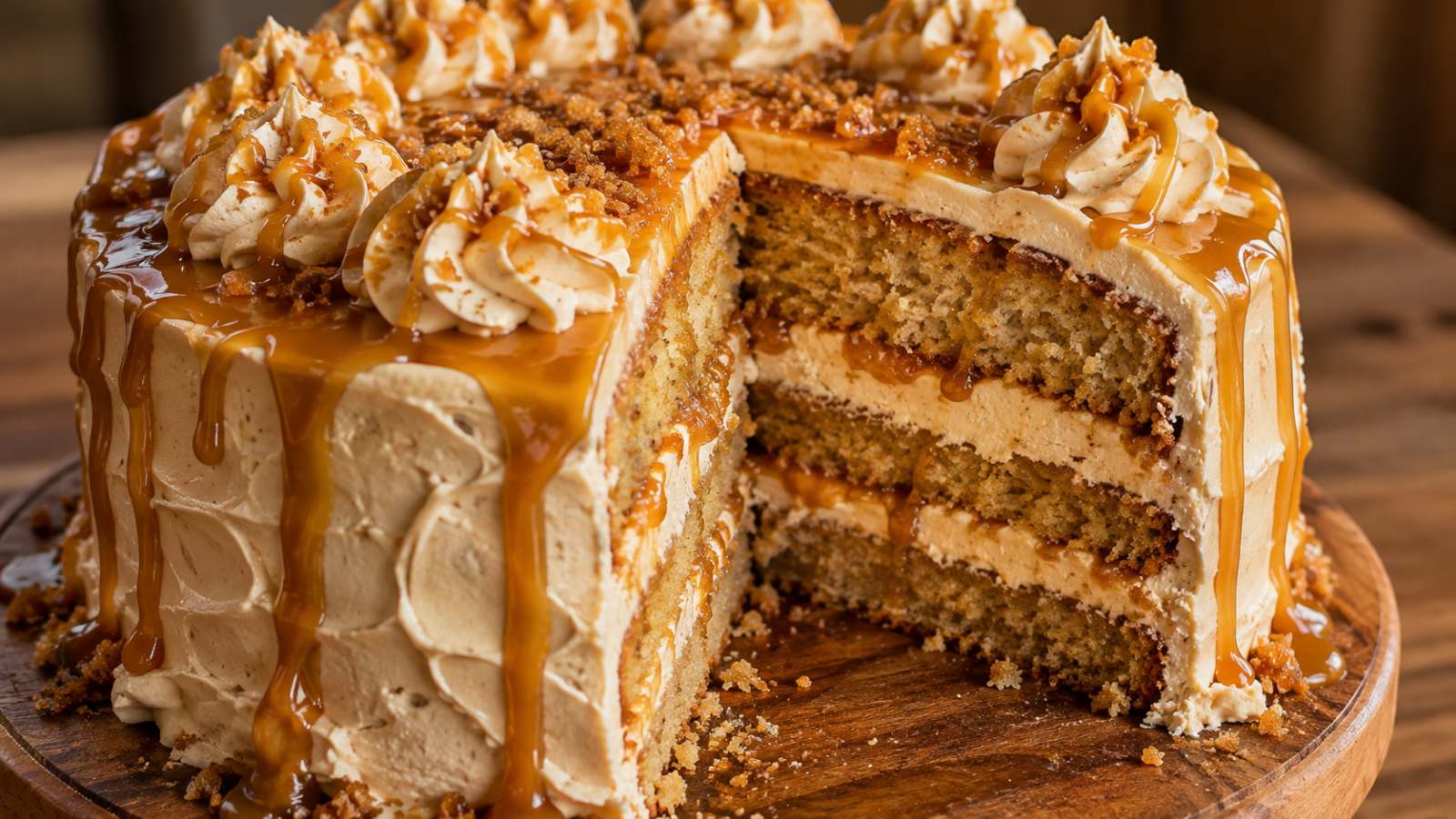
A Harry Potter Butterbeer Cake should taste like the drink that inspired it: buttery caramel, warm vanilla, brown sugar, and a soft cream-soda note rather than an aggressively sweet butterscotch cake. The best version uses brown butter in the sponge, butterscotch in the filling, and a lightly salted vanilla-butterbeer frosting to keep every slice balanced.
This recipe makes one three-layer 8-inch cake, about 12 generous servings.
Ingredients
For the Butterbeer Cake Layers
- 3 cups (375 g) all-purpose flour
- 2 1/2 teaspoons baking powder
- 1/2 teaspoon baking soda
- 3/4 teaspoon fine salt
- 3/4 cup (170 g) unsalted butter
- 1 cup (200 g) packed light brown sugar
- 3/4 cup (150 g) granulated sugar
- 4 large eggs, room temperature
- 2 teaspoons pure vanilla extract
- 1 teaspoon butter extract
- 1 cup (240 ml) buttermilk, room temperature
- 3/4 cup (180 ml) cream soda, room temperature
- 2 tablespoons butterscotch sauce
For the Butterscotch Filling
- 1/2 cup (113 g) unsalted butter
- 1 cup (200 g) packed dark brown sugar
- 3/4 cup (180 ml) heavy cream
- 1/2 teaspoon fine salt
- 1 teaspoon vanilla extract
For the Butterbeer Frosting
- 1 1/2 cups (340 g) unsalted butter, softened
- 5 cups (600 g) powdered sugar, sifted
- 1/3 cup (80 ml) cooled butterscotch sauce
- 2 teaspoons vanilla extract
- 1/2 teaspoon butter extract
- 2 to 4 tablespoons heavy cream
- 1/4 teaspoon fine salt
For Decorating
- Extra butterscotch sauce
- Butterscotch chips, optional
- Gold sprinkles, optional
- Whipped cream, optional
How to Make Harry Potter Butterbeer Cake
Step 1: Bake the Butterbeer Cake Layers
Heat the oven to 350°F (175°C). Grease three 8-inch round cake pans, line the bottoms with parchment, then lightly grease the parchment.
Melt the butter in a light-colored saucepan over medium heat. Continue cooking after it melts, swirling occasionally, until the milk solids turn golden brown and the butter develops a toasted, nutty aroma. Remove it from the heat immediately and cool for about 10 minutes.
Whisk the flour, baking powder, baking soda, and salt together in a separate bowl.
Combine the browned butter, brown sugar, and granulated sugar in a large mixing bowl. Beat for 1 to 2 minutes. The mixture will look slightly grainier than a traditional creamed-butter batter; that is normal.
Beat in the eggs one at a time, mixing thoroughly after each addition. Add the vanilla and butter extracts.
Stir the buttermilk, cream soda, and 2 tablespoons butterscotch sauce together. Add the dry ingredients to the butter mixture in three additions, alternating with the liquid mixture. Begin and finish with the flour.
Mix only until the last traces of flour disappear. Overmixing develops too much gluten and turns a tender cake into a dense one.
Divide the batter evenly among the prepared pans. Bake for 23 to 28 minutes, or until the centers spring back lightly and a toothpick inserted into the middle comes out clean or with a few moist crumbs.
Cool in the pans for 10 minutes, then turn the layers onto wire racks. Let them cool completely before assembling.
Step 2: Make the Butterscotch Filling and Frosting
For the filling, melt the butter in a saucepan over medium-low heat. Add the dark brown sugar and stir until combined.
Pour in the heavy cream carefully. Bring the mixture to a gentle simmer and cook for 4 to 5 minutes, stirring frequently. It should become smooth, glossy, and slightly thickened.
Remove from the heat and stir in the salt and vanilla. Cool completely. The sauce thickens considerably as it cools.
Reserve about 1/3 cup for the frosting and keep the remainder for filling and decorating.
For the frosting, beat the softened butter for 3 to 4 minutes until pale and creamy. Add the powdered sugar gradually, beating on low speed at first to prevent it from flying out of the bowl.
Beat in the cooled butterscotch sauce, vanilla, butter extract, and salt. Add heavy cream one tablespoon at a time until the frosting becomes smooth and spreadable.
Finish by beating the frosting for another 2 minutes at medium speed. You want enough structure to support three layers without making the frosting stiff or chalky.
Step 3: Assemble and Decorate
If the cake layers have domed significantly, trim the tops with a long serrated knife.
Place the first layer on a cake board or serving plate. Spread a thin layer of frosting over the surface, then pipe a raised ring of frosting around the outer edge. This ring acts as a dam and prevents the filling from escaping.
Spoon a layer of cooled butterscotch sauce inside the ring. Do not overfill it; about 1/4 cup is enough.
Add the second cake layer and repeat. Set the third layer on top.
Spread a very thin coat of frosting over the entire cake to trap loose crumbs. Refrigerate for 20 to 30 minutes, then apply the final layer of frosting.
Drizzle butterscotch around the top edge, allowing some of it to run naturally down the sides. Finish with piped frosting, butterscotch chips, gold sprinkles, or small rosettes of whipped cream.
For the cleanest slices, refrigerate the finished Harry Potter Butterbeer Cake for about 30 minutes before cutting, then let each slice sit at room temperature for 10 minutes before serving. Slightly cool cake cuts neatly, while the short rest softens the buttercream and restores its full caramel aroma.
What to Serve With Harry Potter Butterbeer Cake
This is a rich cake, so pair it with drinks and sides that either reinforce its caramel character or provide contrast.
Hot black tea works particularly well because its tannins cut through buttercream and butterscotch. Strong coffee or espresso does the same.
For a full themed dessert, serve thin slices with chilled cream soda or homemade butterbeer. Keep the drinks less sweet than the cake or the combination can become overwhelming.
Vanilla ice cream is a good choice for warm-weather serving. For something sharper, add fresh apple or pear slices; their acidity and crisp texture balance the buttery caramel flavors.
Harry Potter Butterbeer Cake Nutrition Information
Approximate nutrition per serving, based on 12 servings:
- Calories: 760
- Carbohydrates: 103 g
- Protein: 6 g
- Fat: 37 g
- Saturated fat: 23 g
- Sugar: 77 g
- Fiber: 1 g
- Sodium: 390 mg
Actual values will vary with the butterscotch sauce, frosting quantity, decorations, and serving size.
FAQs
What does butterbeer cake taste like?
It tastes primarily of butterscotch, caramelized brown sugar, vanilla, browned butter, and cream soda. The flavor should be buttery and warm rather than intensely sugary. A little salt in both the sauce and frosting keeps the caramel flavors defined.
Does the cake contain actual beer?
No. Traditional versions of this dessert typically use cream soda and butterscotch flavors rather than beer. This recipe contains no alcohol.
Can I make the cake layers ahead of time?
Yes. Bake and cool the layers completely, wrap each one tightly in plastic wrap, and keep them at room temperature for one day or refrigerate them for up to three days. For longer storage, freeze the wrapped layers for up to two months.
Can I use store-bought butterscotch sauce?
Yes. Choose a thick, good-quality sauce rather than a very thin ice-cream syrup. Thin sauce can soak into the layers and make the filling unstable.
Why did my butterscotch filling turn grainy?
Brown sugar that has not fully dissolved can crystallize as the sauce cools. Keep the heat moderate, stir until the sugar dissolves, and avoid scraping dried sugar crystals from the sides of the saucepan back into the sauce.
Why is my cake dense?
The most common causes are overmixing after the flour is added, using cold ingredients, packing too much flour into measuring cups, or allowing the cream soda to lose too much carbonation before mixing. Weighing the flour gives the most consistent result.
Can I make this as cupcakes?
Yes. Fill lined cupcake wells about two-thirds full and bake at 350°F (175°C) for roughly 17 to 20 minutes. Once cool, remove a small piece from the center, add butterscotch filling, and pipe the frosting on top.
How should I store the finished cake?
Keep it covered in the refrigerator for up to four days. For the best texture, bring individual slices to room temperature for about 20 to 30 minutes before eating.