
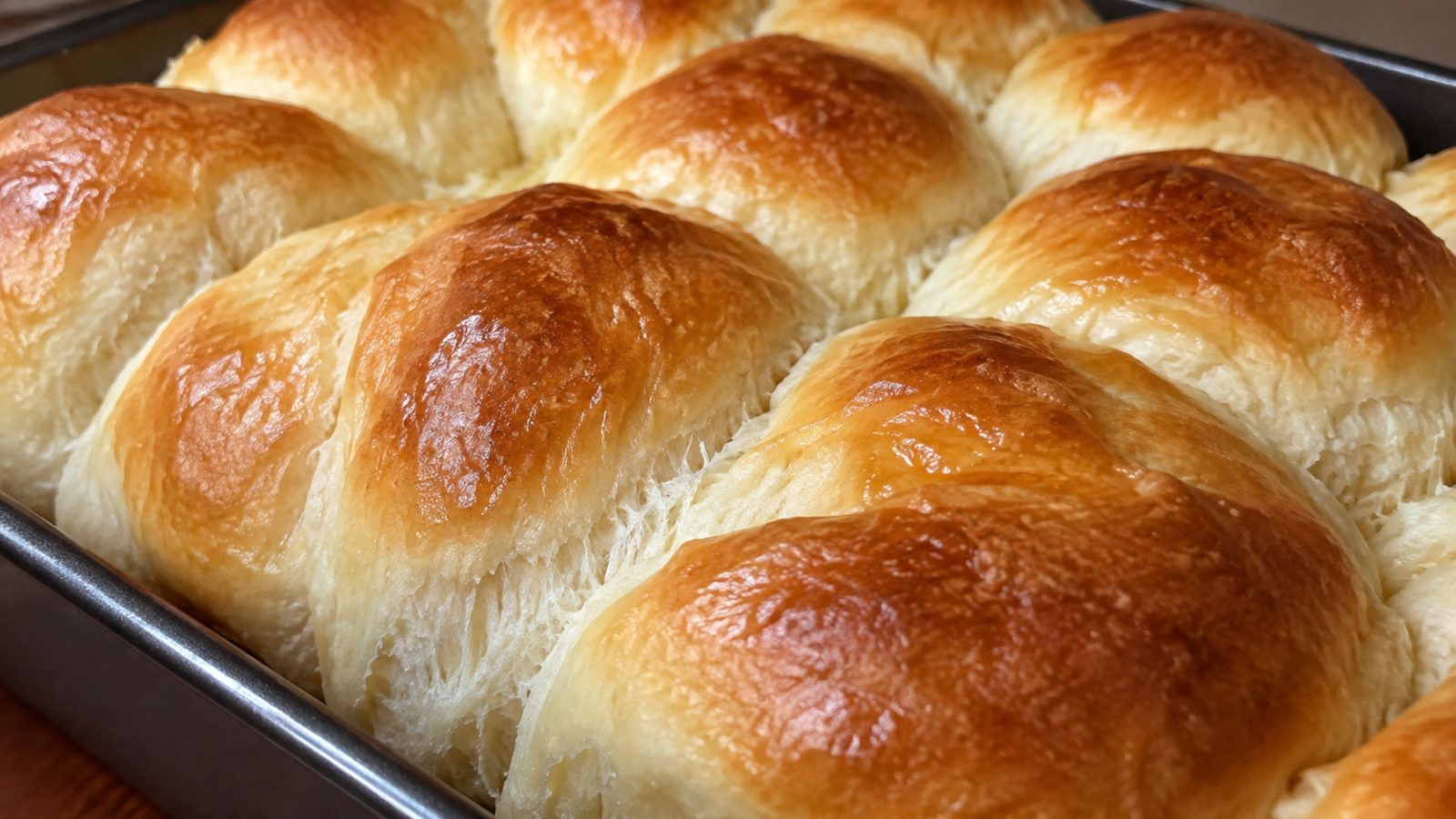
These rolls should pull apart in soft, feathery layers with a tender crumb and a thin golden crust. The texture comes from enriched dough made with milk, butter, egg, and enough kneading to build gluten without loading the dough with excess flour. Proper proofing matters more than rushing the clock; the dough should tell you when it is ready.
Ingredients
For the Dough
- 1 cup whole milk, warmed to 105–110°F
- 2 1/4 teaspoons active dry yeast
- 1/4 cup granulated sugar, divided
- 1 large egg, room temperature
- 1/4 cup unsalted butter, melted and slightly cooled
- 1 teaspoon fine salt
- 3 to 3 1/2 cups all-purpose flour
For Finishing
- 2 tablespoons unsalted butter, melted
- Flaky salt, optional
How to Make Soft and Fluffy Dinner Rolls From Scratch
Step 1: Mix and Knead the Dough
Pour the warm milk into a large mixing bowl. Stir in the yeast and 1 tablespoon of the sugar. Let the mixture stand for 5 to 10 minutes, until the surface looks foamy.
If nothing happens, the yeast may be inactive or the milk may have been too hot or too cold. Starting again at this stage is better than discovering after two hours that the dough will not rise.
Add the remaining sugar, egg, melted butter, and salt. Stir until combined.
Add 3 cups of flour and mix until a shaggy dough forms. If the dough is extremely wet, add more flour 1 tablespoon at a time.
Turn the dough onto a lightly floured surface and knead for 8 to 10 minutes. You can also use a stand mixer fitted with a dough hook for about 6 to 8 minutes on medium-low speed.
The finished dough should feel smooth, elastic, and slightly tacky. Avoid adding flour simply because the dough sticks lightly to your fingers. Too much flour produces dense, dry rolls.
To check the gluten development, stretch a small piece of dough between your fingers. If it forms a thin membrane before tearing, the dough has been kneaded enough.
Step 2: Let the Dough Rise and Shape the Rolls
Lightly grease a large bowl. Place the dough inside and turn it once so the surface is lightly coated.
Cover the bowl and let the dough rise in a warm, draft-free place until doubled in volume, about 60 to 90 minutes.
Do not judge the rise by time alone. A cool kitchen may require longer, while a warm kitchen can speed things up considerably.
Gently press the air from the dough and transfer it to a work surface. Divide it into 12 equal portions. For evenly sized rolls, weighing the dough and dividing the total weight by 12 gives the most consistent result.
Shape each piece by pulling the edges toward the center, turning it seam-side down, and rolling it against the work surface with a cupped hand until smooth and round.
Arrange the rolls in a greased 9-by-13-inch baking dish with a little space between them.
Cover loosely and let them rise again for 35 to 60 minutes, until noticeably puffy and nearly touching.
The rolls are ready to bake when a gentle fingertip press leaves an indentation that slowly springs partway back. If it snaps back immediately, they need more proofing. If the indentation collapses completely, they may be overproofed.
Step 3: Bake Until Golden and Finish With Butter
Preheat the oven to 375°F during the final part of the second rise.
Bake the rolls for 18 to 22 minutes, until the tops are evenly golden brown. The center rolls should reach about 190°F internally if checked with an instant-read thermometer.
Remove the pan from the oven and immediately brush the warm rolls with melted butter. This softens the crust and adds a rich finish.
Let them cool for about 10 minutes before serving. Pulling them apart straight from the oven can compress the delicate interior while the crumb is still setting.
What to Serve With Soft and Fluffy Dinner Rolls
Warm dinner rolls work particularly well with meals that include gravy, sauce, or broth. Serve them alongside roast chicken, pot roast, beef stew, turkey, baked ham, or braised short ribs.
They are equally useful with creamy soups, chili, or vegetable stews because the soft crumb absorbs liquid without falling apart immediately.
For a simpler serving, split them while warm and add salted butter, honey butter, or fruit preserves. Soft and Fluffy Dinner Rolls From Scratch also make excellent small sandwiches the next day because their enriched crumb stays tender longer than lean bread.
Soft and Fluffy Dinner Rolls Nutrition Information
Approximate nutrition per roll, based on 12 rolls:
- Calories: 190
- Protein: 5 g
- Carbohydrates: 29 g
- Total fat: 6 g
- Saturated fat: 3.5 g
- Fiber: 1 g
- Sugar: 5 g
- Sodium: 210 mg
Nutrition values vary depending on the exact flour, milk, butter, and serving size used.
FAQs
Why are my dinner rolls dense instead of fluffy?
The most common causes are too much flour, insufficient kneading, inactive yeast, or dough that did not rise long enough. The dough should remain slightly tacky and should roughly double during the first rise.
Can I use instant yeast instead of active dry yeast?
Yes. Use the same amount and mix it directly with the flour. You do not need to dissolve instant yeast in the milk first, although the milk should still be warm rather than hot.
Can I make the dough ahead of time?
Yes. After shaping the rolls, cover the pan tightly and refrigerate overnight. The next day, let the rolls sit at room temperature until puffy, usually 45 to 90 minutes, then bake as directed.
Why should I avoid adding too much flour?
Extra flour stiffens the dough and lowers its hydration. The result is a tighter, drier crumb instead of the soft, airy texture you want.
Can I use bread flour?
Yes. Bread flour produces slightly chewier rolls because of its higher protein content. All-purpose flour gives a softer, more delicate crumb.
How do I know when the dough has risen enough?
Look at volume and texture rather than the clock. The first rise should roughly double the dough. During the second rise, the shaped rolls should look noticeably swollen and nearly touch one another.
Can I freeze the baked rolls?
Yes. Cool them completely, place them in an airtight freezer-safe bag, and freeze for up to 2 months. Thaw at room temperature and warm them in a 300°F oven for about 8 to 10 minutes.
How should I store leftover rolls?
Keep completely cooled rolls in an airtight container at room temperature for up to 3 days. Reheat them briefly in a low oven or microwave before serving to restore their soft texture.